Team story
Origins
At Enstone, the Lotus name arrived at an organisation that had raced as Benetton and Renault. In 2012 Genii Capital was its principal owner; Lotus was the branding partner. This was neither the organisational rebirth of Colin Chapman’s Team Lotus nor Tony Fernandes’s team.
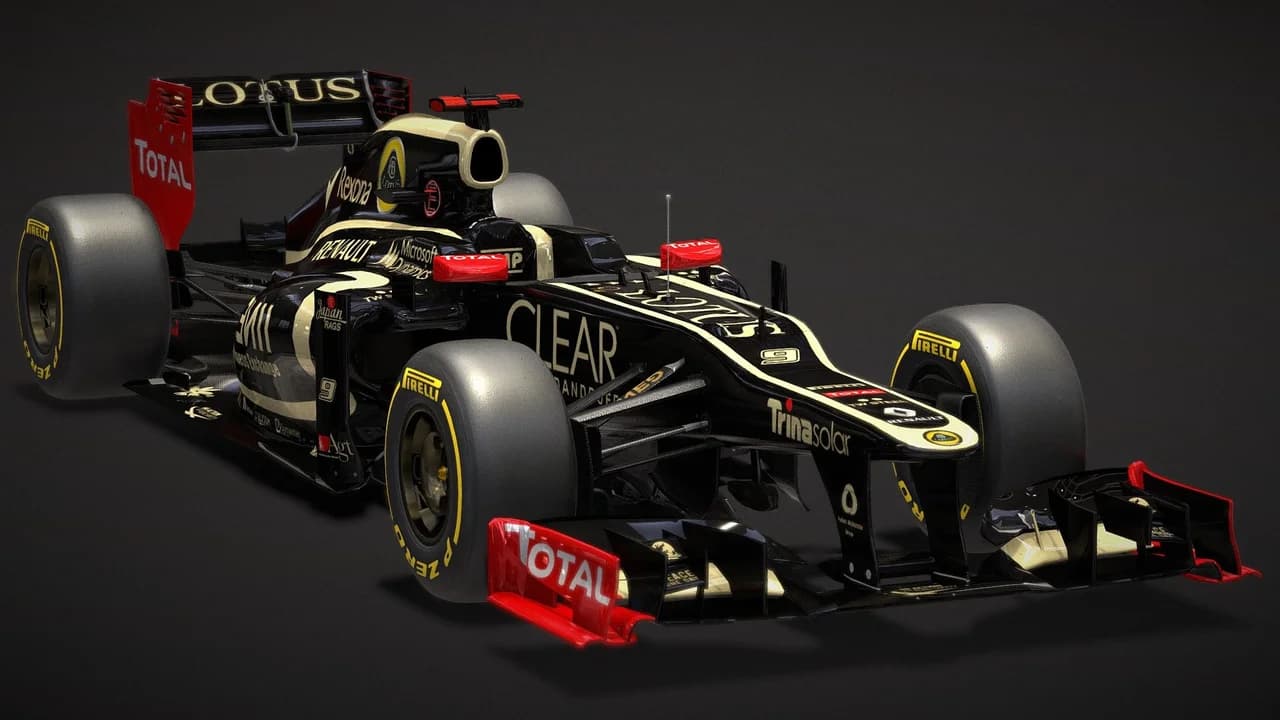
Kimi Räikkönen returned from his spell in rallying to join Romain Grosjean in the E20.
The Formula 1 journey
Räikkönen won at Abu Dhabi in 2012 and in Australia in 2013. The E20 and E21 allowed the team to collect podiums with both drivers and finish fourth in the Constructors’ Championship in both seasons. The transition to hybrid Formula 1 in 2014 instead coincided with a sharp decline; Pastor Maldonado took the seat vacated by the Finn.
Historical timeline
Three chapters in the story of Lotus F1
Three episodes to revisit the people, cars and races that shaped this journey.
First appearance · Australian Grand Prix
Kimi Räikkönen · Australian Grand Prix 2012. The recorded position is P7; this number alone does not show whether the driver completed the race distance. This is the first recorded race start, or the first entry if the team never started a race.
Sporting landmark · Abu Dhabi Grand Prix
Kimi Räikkönen · Abu Dhabi Grand Prix 2012. The recorded position is P1; this number alone does not show whether the driver completed the race distance. This marks the first win or podium where one exists, otherwise the highest recorded placing for this constructor.
Latest recorded appearance · Abu Dhabi Grand Prix
Pastor Maldonado · Abu Dhabi Grand Prix 2015. The recorded outcome is DNF. This is the last race start attributed to this constructor in the archive, not necessarily the end of the organisation behind it.
A distinctive way of racing
The black-and-gold livery recalled the old marque, but the cars belonged to Enstone’s design tradition. The 2014 E22 made the search for an original solution visible through its asymmetric twin-element nose. In 2015 the E23 switched from Renault to Mercedes power: Grosjean brought Lotus back to the podium at Spa, without resolving the team’s financial difficulties.
What remains
Renault completed its repurchase in December 2015 and resumed its own name the following season. The Lotus F1 period leaves two victories and twenty-five podiums, not the titles of Chapman’s team. The meaningful continuity is that of Enstone’s people and facilities: a factory capable of becoming competitive again under different names, but with results attributed to the correct identity.