Team story
Origins
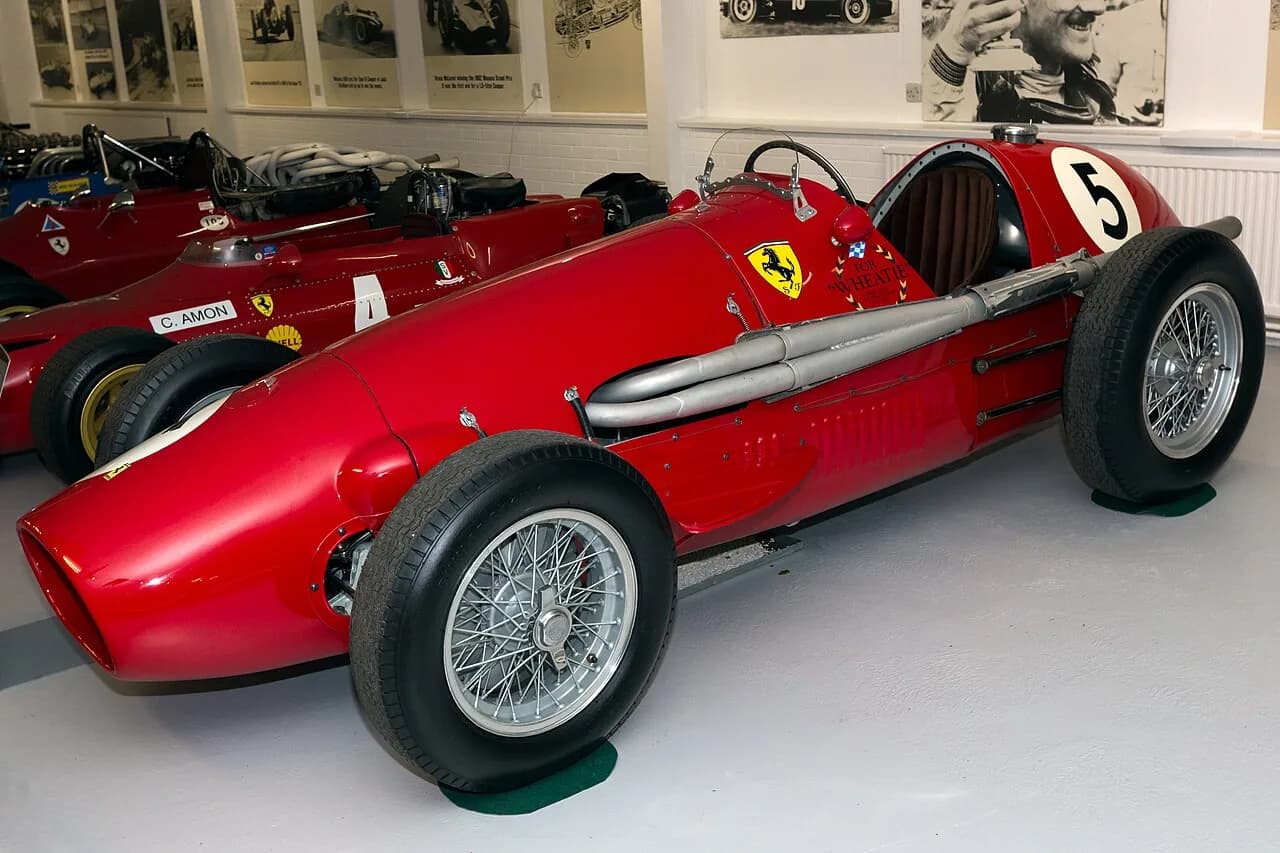
Enzo Ferrari founded the Scuderia in 1929 to race Alfa Romeo cars; in 1947 he began building cars under his own name. Ferrari entered the second round of the first World Championship, Monaco in 1950, and has not missed a season since. José Froilán González took its first championship victory at Silverstone in 1951, and Alberto Ascari won the 1952 and 1953 titles.
When the constructors' championship began in 1958, Maranello had already brought chassis, engine, racing team and road car production together in one place.
The Formula 1 journey
Ferrari won its first constructors' title in 1961 with the 156, having already won drivers' championships in the previous decade. Luca di Montezemolo's management and Niki Lauda's driving rebuilt the team in the 1970s; the successes of 1982 and 1983, by contrast, came in seasons also marked by tragedy and tension. The Todt-Brawn-Byrne-Schumacher era turned Ferrari into an organisational machine: six consecutive constructors' titles from 1999 to 2004 and five successive championship doubles from 2000.
Räikkönen won the drivers' championship in 2007, while the 2008 constructors' title remains, so far, the Prancing Horse's last.
Historical timeline
Three chapters in the story of Ferrari
Three episodes to revisit the people, cars and races that shaped this journey.
First appearance · Monaco Grand Prix
Alberto Ascari · Monaco Grand Prix 1950. The recorded position is P2; this number alone does not show whether the driver completed the race distance. This is the first recorded race start, or the first entry if the team never started a race.
Sporting landmark · British Grand Prix
José Froilán González · British Grand Prix 1951. The recorded position is P1; this number alone does not show whether the driver completed the race distance. This marks the first win or podium where one exists, otherwise the highest recorded placing for this constructor.
Latest recorded appearance · Spanish Grand Prix
Lewis Hamilton · Spanish Grand Prix 2026. The recorded outcome is DNF. This is the latest start in the archived snapshot, not the end of the team’s activities.
A distinctive way of racing
At Maranello, chassis and engine are created under the same name. It is a difference visible in the cars, but also in how the team is discussed: a Ferrari must not only be fast, it must carry expectations that no regulation change can reset. Forghieri's work and, later, that of the group assembled by Todt show two different responses to this pressure.
In their best years, continuity allowed a project to develop without starting again after every defeat. Reorganisations during less successful periods instead show how difficult it is to give people time to work when everyone expects an immediate victory.
What remains
You can follow the World Championship season by season without losing sight of the Ferrari name. The cars change, from front-engined machines to hybrid Formula 1, and so do the drivers fans learn to recognise: Ascari, Lauda, Schumacher, Räikkönen and many others. It is not a history made up only of titles.
It includes long spells without winning the championship, fresh starts and missed opportunities. Its continuity lies precisely here: each generation encounters a different Ferrari, but finds itself comparing it with those that came before.