Team story
Origins
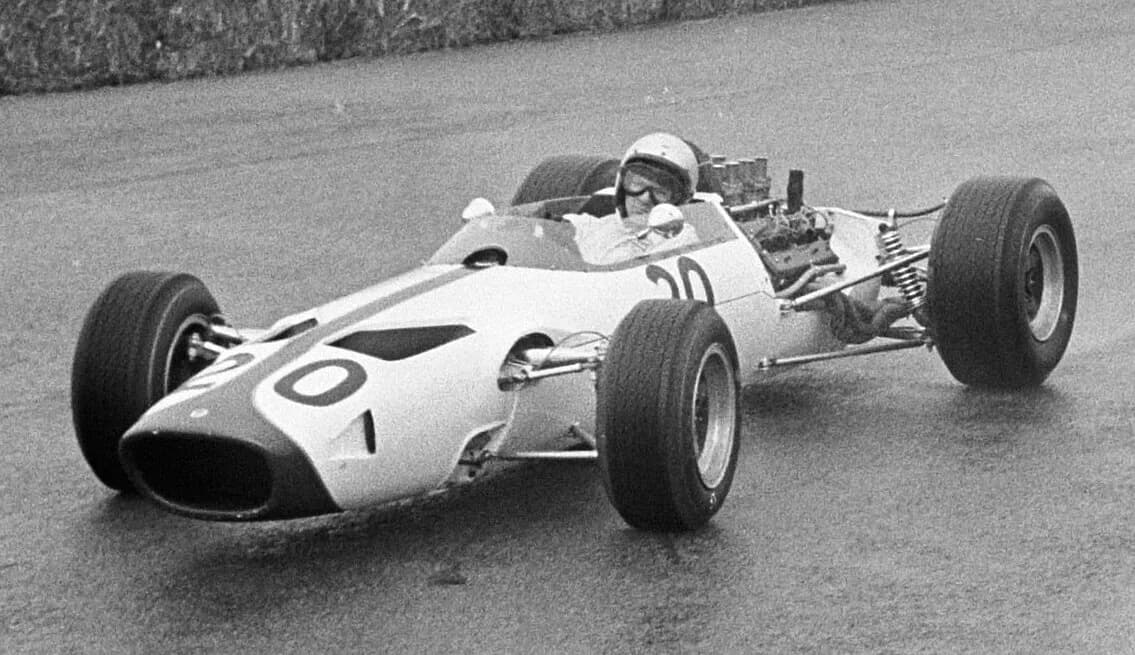
Bruce McLaren founded Bruce McLaren Motor Racing in 1963, turning his experience as a racing and test driver into a team capable of designing its own cars. Its World Championship debut came in 1966; two years later, at Spa, Bruce won in the M7A and became one of the few drivers to win in a car bearing their own name. His death during a test at Goodwood in 1970 did not halt the project: Teddy Mayer preserved its spirit and led the transition from a young workshop to an established constructor.
The Formula 1 journey
World Championship success in 1974 came with Emerson Fittipaldi and opened a history built around very different cycles. The most profound transformation began in 1981, when Project Four brought Ron Dennis into the team and the MP4/1 introduced an entirely carbon-fibre monocoque. With TAG-Porsche turbos, then Honda and the Prost–Senna pairing, McLaren dominated the second half of the 1980s; in 1988, it won fifteen of sixteen races.
Häkkinen and Mercedes brought the title back to Woking in 1998. After a long rebuilding process, with Norris and Piastri the team won two consecutive Constructors' titles, in 2024 and 2025.
Historical timeline
Three chapters in the story of McLaren
Three episodes to revisit the people, cars and races that shaped this journey.
First appearance · Monaco Grand Prix
Bruce McLaren · Monaco Grand Prix 1966. The recorded outcome is DNF. This is the first recorded race start, or the first entry if the team never started a race.
Sporting landmark · Belgian Grand Prix
Bruce McLaren · Belgian Grand Prix 1968. The recorded position is P1; this number alone does not show whether the driver completed the race distance. This marks the first win or podium where one exists, otherwise the highest recorded placing for this constructor.
Latest recorded appearance · Spanish Grand Prix
Oscar Piastri · Spanish Grand Prix 2026. The recorded position is P8; this number alone does not show whether the driver completed the race distance. This is the latest start in the archived snapshot, not the end of the team’s activities.
A distinctive way of racing
Bruce's McLaren and Ron Dennis's shared a name, but not a way of working. With John Barnard's MP4/1, carbon fibre became the starting point for a new generation of chassis; a few years later, Lauda and Prost brought success to the TAG-Porsche turbo-powered cars. The Honda chapter added a different problem: managing Senna and Prost in the same team.
Their battles show how the advantage of having two champions can turn into conflict. Woking's history also runs through that choice, not just the innovations of its single-seaters.
What remains
The founder's name remained on the cars even after Goodwood. No single technical project preserved it: Bruce's cars were followed by carbon fibre, turbos, the Mercedes partnership and the seasons of recovery. The fifteenth victory of 1988 and the titles won with Norris and Piastri belong to teams with very different people and resources.
Setting them side by side reveals what an annual table cannot tell us: McLaren has passed through periods when winning seemed normal and others when, above all, it needed to find its way back to the top.