Team story
Origins
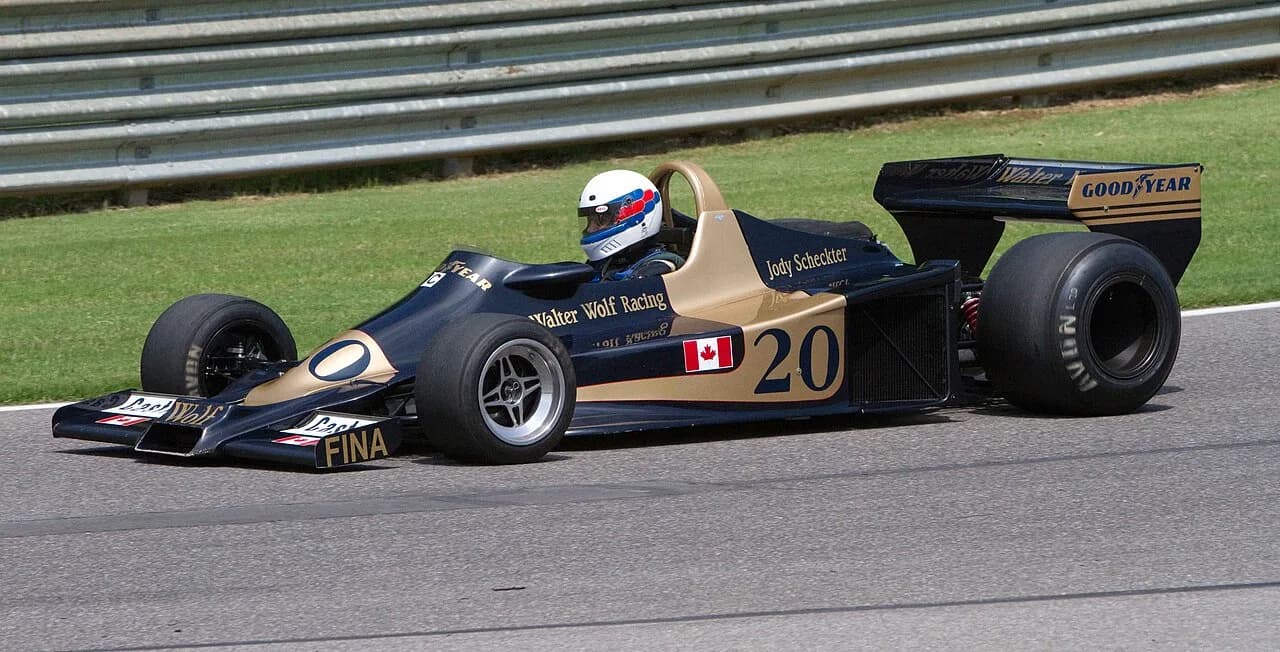
After the 1976 partnership with Frank Williams, Walter Wolf reorganised the programme around Peter Warr, Harvey Postlethwaite and Jody Scheckter. The Cosworth-powered WR1 made its debut in Argentina in 1977 and won immediately. It was not, however, the same car as the previous season’s: the new chassis replaced the Hesketh-derived design.
The Formula 1 journey
Scheckter added victories in Monaco and Canada and ended 1977 second in the drivers’ championship, behind Niki Lauda. In 1978, he returned to the podium several times, but without winning. James Hunt was given the seat for 1979, then left racing during the season; Keke Rosberg took his place.
Neither scored points in that year’s Wolfs.
Historical timeline
Three chapters in the story of Wolf
Three episodes to revisit the people, cars and races that shaped this journey.
First appearance · Argentine Grand Prix
Jody Scheckter · Argentine Grand Prix 1977. The recorded position is P1; this number alone does not show whether the driver completed the race distance. This is the first recorded race start, or the first entry if the team never started a race.
Sporting landmark · Argentine Grand Prix
Jody Scheckter · Argentine Grand Prix 1977. The recorded position is P1; this number alone does not show whether the driver completed the race distance. This marks the first win or podium where one exists, otherwise the highest recorded placing for this constructor.
Latest recorded appearance · United States Grand Prix
Keke Rosberg · United States Grand Prix 1979. The recorded outcome is DNF. This is the last race start attributed to this constructor in the archive, not necessarily the end of the organisation behind it.
A distinctive way of racing
Postlethwaite had already worked on the Hesketh equipment transferred to the previous organisation, but with the WR1 he produced a new design for Scheckter. The team normally entered a single car, concentrating the development programme on one driver. In 1978, the WR5 introduced ground effect; subsequent developments did not recover the first season’s winning form.
Scheckter then left for Ferrari, where he won the title in 1979.
What remains
At the end of 1979, Wolf sold the equipment to Fittipaldi, closing three seasons under its own name. Victory on debut and Scheckter’s title challenge remain the central episodes, followed by a rapid decline. The preceding Wolf-Williams must be kept separate: the 1977 victories belong to the new Wolf, while Frank Williams’s career continued through a different organisation.