Team story
Origins
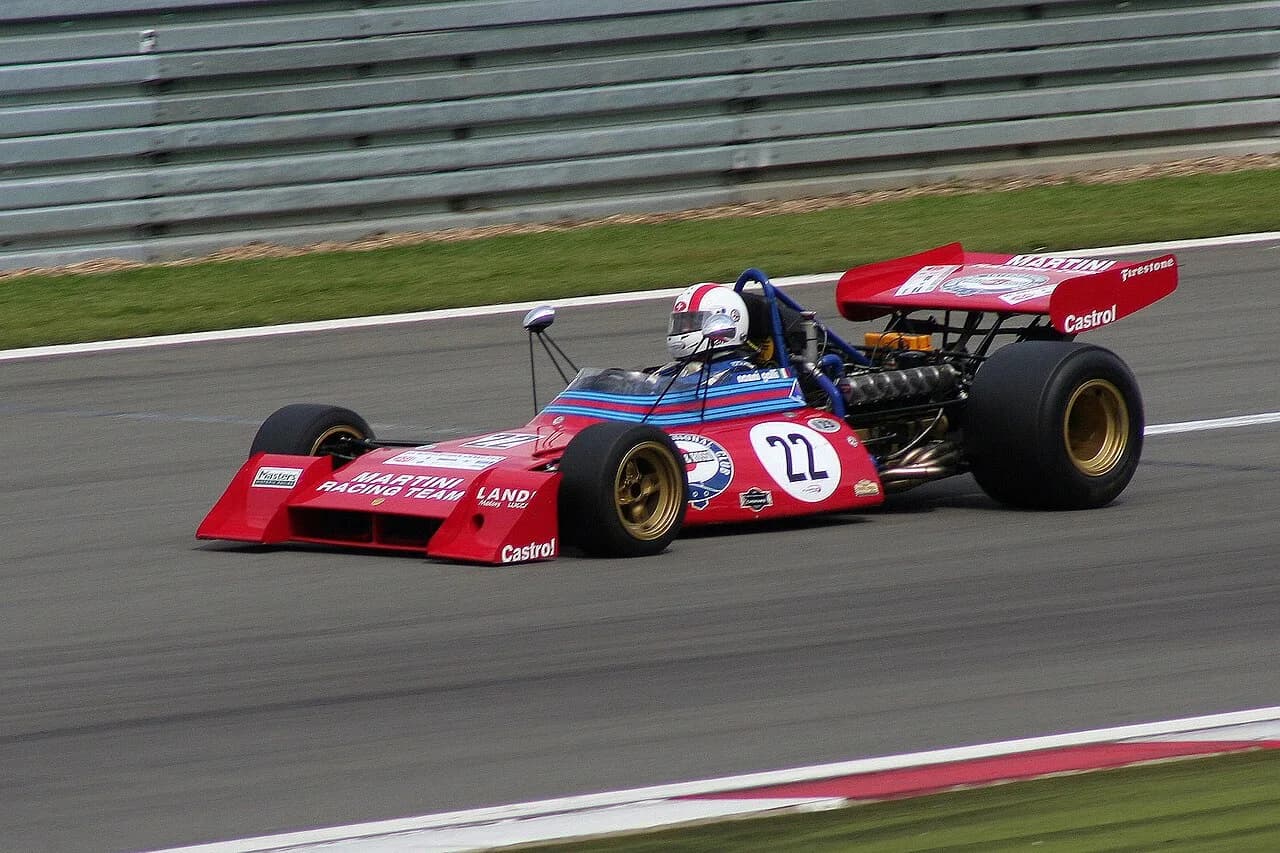
From karts to single-seaters, brothers Gianfranco and Luciano Pederzani grew Bologna’s Tecno operation through to Clay Regazzoni’s European Formula 2 title in 1970. The name had already appeared in the 1969 German Grand Prix with François Cevert, but on a Formula 2 car admitted to the race: the Formula 1 programme itself began in 1972.
The Formula 1 journey
Nanni Galli and Derek Bell drove the first PA123s without scoring points. In 1973, Chris Amon was chosen for a one-car programme and took sixth at Zolder, the constructor’s only points-scoring race. After further retirements, its final world championship start came at Zandvoort.
The subsequent appearance in Austria did not produce another start.
Historical timeline
Three chapters in the story of Tecno
Three episodes to revisit the people, cars and races that shaped this journey.
First appearance · German Grand Prix
François Cevert · German Grand Prix 1969. The recorded outcome is DNF. This is the first recorded race start, or the first entry if the team never started a race.
Sporting landmark · Belgian Grand Prix
Chris Amon · Belgian Grand Prix 1973. The recorded position is P6; this number alone does not show whether the driver completed the race distance. This marks the first win or podium where one exists, otherwise the highest recorded placing for this constructor.
Latest recorded appearance · Dutch Grand Prix
Chris Amon · Dutch Grand Prix 1973. The recorded outcome is DNF. This is the last race start attributed to this constructor in the archive, not necessarily the end of the organisation behind it.
A distinctive way of racing
Tecno wanted to build its own flat-twelve engine too, with Martini’s support. In 1973, however, chassis work split into two strands: the Pederzanis commissioned Alan McCall, while David Yorke and the sponsor commissioned an alternative from Gordon Fowell. At Silverstone, Amon had two different designs available.
The duplication absorbed resources without delivering a consistently competitive car.
What remains
The closure of the F1 programme left a stronger legacy in the junior categories, where Tecnos had helped drivers such as Regazzoni and Cevert progress. Martini moved to Brabham in 1974. Amon’s single point remains the world championship project’s ceiling, while the 1969 appearance has a separate significance: it reflects the Formula 2 past, rather than bringing the PA123’s debut forward by three years.