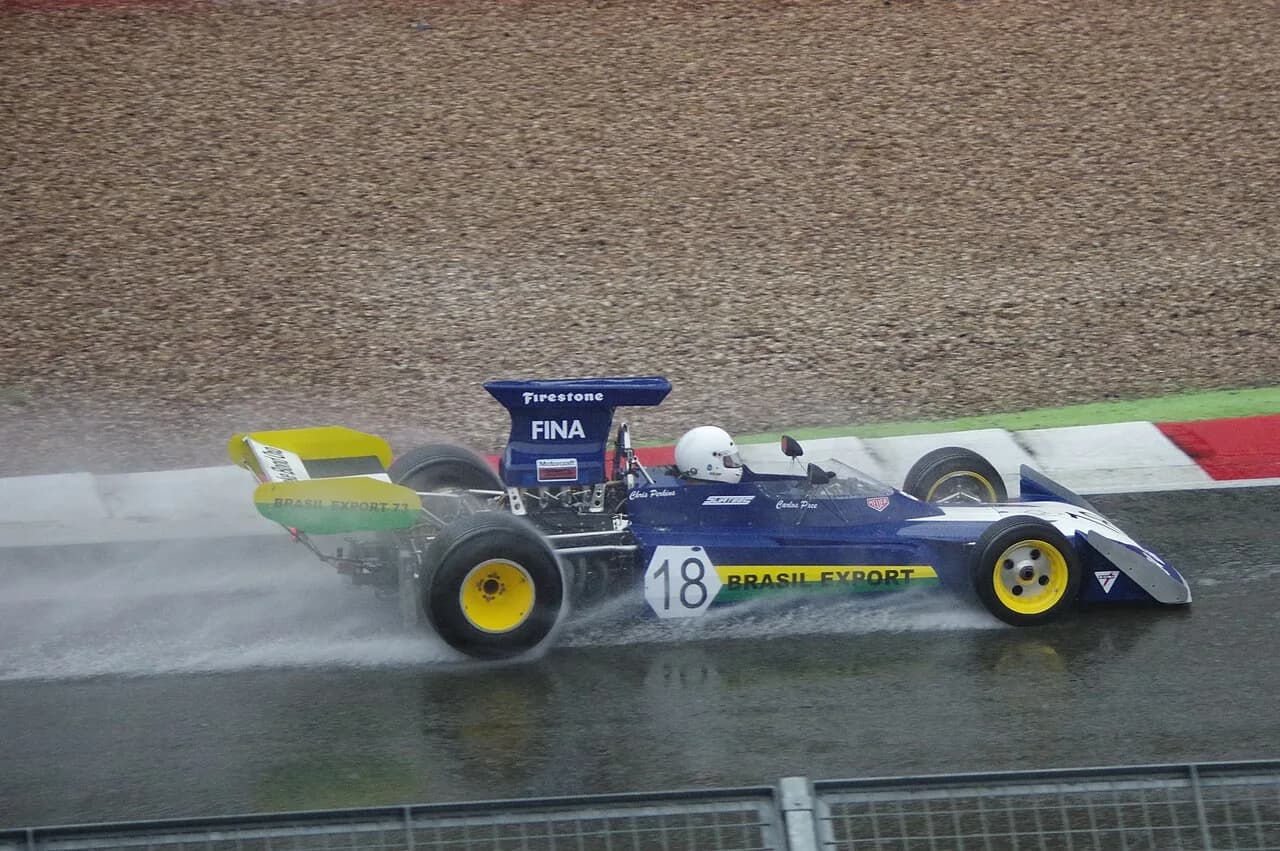
Team story
Origins
John Surtees began 1970 with a purchased McLaren while preparing the first Formula 1 car bearing his own name. The TS7 made its debut at Brands Hatch with its constructor at the wheel. Work on the TS5 Formula 5000 cars had already laid the foundations: the move into Grands Prix grew out of that experience, rather than simply putting a champion’s name on somebody else’s car.
The Formula 1 journey
Mike Hailwood took the TS9B to second at Monza in 1972; Carlos Pace added third in Austria in 1973. Those were the two world championship podiums. During the same period, Hailwood won the European Formula 2 title in the TS10 and Gijs van Lennep the British Formula 5000 title in the TS11.
Success in the lower categories therefore remained more extensive than in F1.
Historical timeline
Three chapters in the story of Surtees
Three episodes to revisit the people, cars and races that shaped this journey.
First appearance · British Grand Prix
John Surtees · British Grand Prix 1970. The recorded outcome is DNF. This is the first recorded race start, or the first entry if the team never started a race.
Sporting landmark · Italian Grand Prix
Mike Hailwood · Italian Grand Prix 1972. The recorded position is P2; this number alone does not show whether the driver completed the race distance. This marks the first win or podium where one exists, otherwise the highest recorded placing for this constructor.
Latest recorded appearance · Canadian Grand Prix
René Arnoux · Canadian Grand Prix 1978. The recorded outcome is DNF. This is the last race start attributed to this constructor in the archive, not necessarily the end of the organisation behind it.
A distinctive way of racing
Surtees designed, built and initially drove his own single-seaters. The agreement with Rob Walker brought Brooke Bond Oxo liveries, while other backers supported separate cars within the same team. Matchbox and Durex followed.
The TS19 allowed a return to two works cars, but even Alan Jones in 1976 could not qualify a Surtees in the top ten.
What remains
The TS20 arrived in 1978, the constructor’s final world championship season, too late to reverse the decline. The story continued briefly in the British F1 series, with a victory for Gordon Smiley in 1979. The Gold Cups won by John Surtees in 1970 and 1971 were also non-championship races: that context explains how a team capable of winning left the world championship without an official victory.