Team story
Origins
Aguri Suzuki announced his own team in November 2005, leaving only a few months to prepare for its debut. Honda’s support made it possible to adapt the 2002 Arrows A23 to the new Japanese V8 and the 2006 rules. The result was the SA05, an interim solution with which Takuma Sato and Yuji Ide contested the Bahrain opener, followed during the year by the SA06.
The Formula 1 journey
The clearest improvement came in 2007, with Sato and Anthony Davidson. Sato scored the first point in Spain and took sixth in Canada, the team’s best result. The following season lasted only four Grands Prix: at Barcelona, Sato was thirteenth and Davidson retired.
On 6 May 2008, Suzuki announced the end of the team’s Formula 1 operations.
Historical timeline
Three chapters in the story of Super Aguri
Three episodes to revisit the people, cars and races that shaped this journey.
First appearance · Bahrain Grand Prix
Takuma Sato · Bahrain Grand Prix 2006. The recorded position is P18; this number alone does not show whether the driver completed the race distance. This is the first recorded race start, or the first entry if the team never started a race.
Sporting landmark · Canadian Grand Prix
Takuma Sato · Canadian Grand Prix 2007. The recorded position is P6; this number alone does not show whether the driver completed the race distance. This marks the first win or podium where one exists, otherwise the highest recorded placing for this constructor.
Latest recorded appearance · Spanish Grand Prix
Anthony Davidson · Spanish Grand Prix 2008. The recorded outcome is DNF. This is the last race start attributed to this constructor in the archive, not necessarily the end of the organisation behind it.
A distinctive way of racing
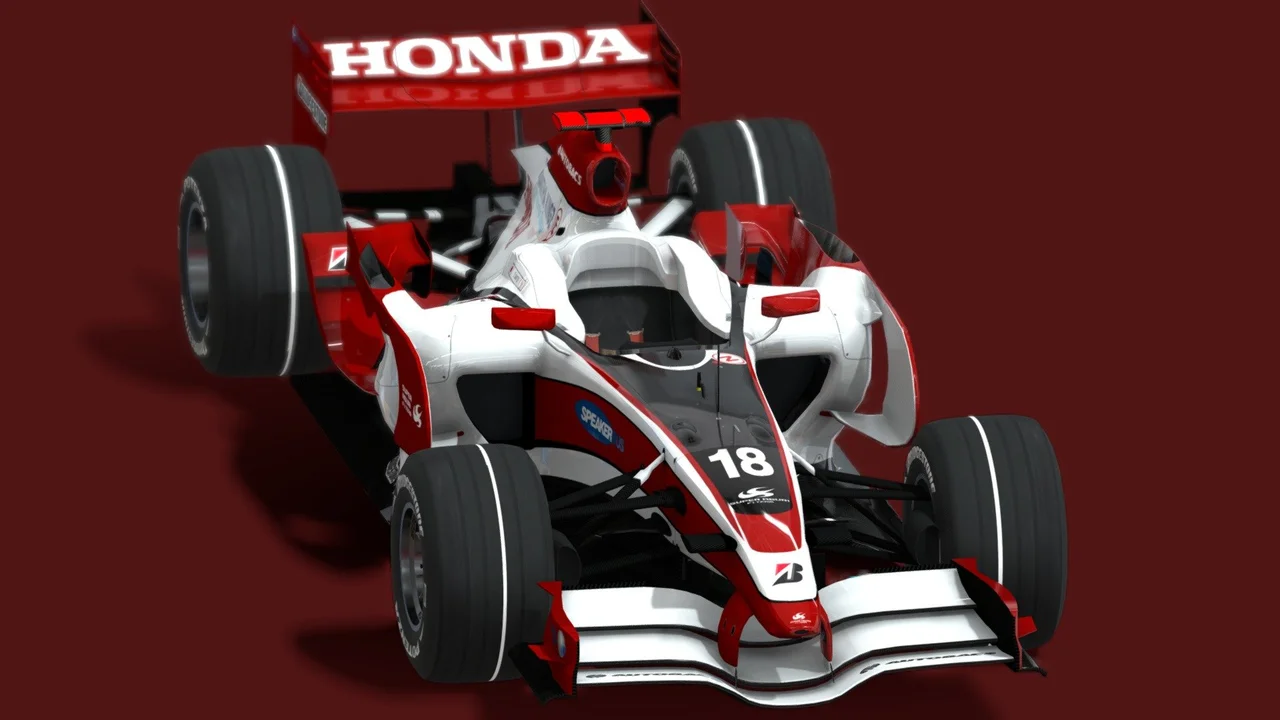
The relationship with Honda went beyond the engine. The SA07 used the 2006 Honda as its basis; the SA08 combined elements of the RA107 with the RA108’s rear end. For a small organisation, this technical dependence made agreements over customer cars crucial.
The original all-Japanese driver pairing changed during 2006, when Franck Montagny and then Sakon Yamamoto replaced Ide.
What remains
The payments promised by SS United never arrived, and the attempted agreement with Magma Group fell through. The team’s demise therefore followed a funding crisis, not simply the SA08’s performance. Its record includes two points-scoring races and a tangible progression from the old Arrows platform to Honda-derived cars: a short history in which Sato was the driver present from the beginning to the closure.