Team story
Origins
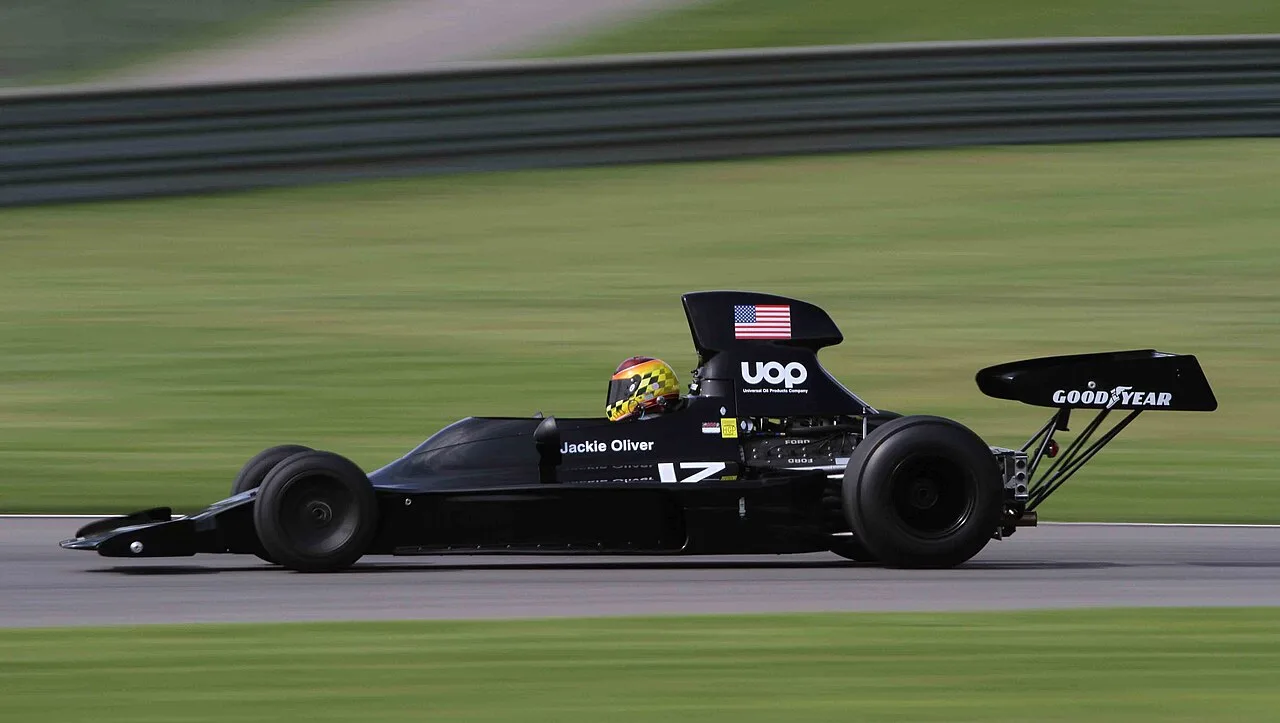
Don Nichols brought Shadow from Can-Am to Formula 1 in 1973, with an Anglo-American organisation and the DN1. George Follmer scored points on its South African debut and reached the podium at the next race in Spain. Jackie Oliver was the new programme’s other driver, with the effort built around Tony Southgate’s design.
The Formula 1 journey
The 1975 DN5 enabled Jean-Pierre Jarier to take two consecutive poles at the start of the season; Tom Pryce added another at Silverstone. The team lost Peter Revson in practice at Kyalami in 1974 and Pryce in the 1977 race. Alan Jones took over after the Welshman’s death and won in Austria with the DN8, securing Shadow’s only World Championship victory.
Historical timeline
Three chapters in the story of Shadow
Three episodes to revisit the people, cars and races that shaped this journey.
First appearance · South African Grand Prix
George Follmer · South African Grand Prix 1973. The recorded position is P6; this number alone does not show whether the driver completed the race distance. This is the first recorded race start, or the first entry if the team never started a race.
Sporting landmark · Austrian Grand Prix
Alan Jones · Austrian Grand Prix 1977. The recorded position is P1; this number alone does not show whether the driver completed the race distance. This marks the first win or podium where one exists, otherwise the highest recorded placing for this constructor.
Latest recorded appearance · South African Grand Prix
Geoff Lees · South African Grand Prix 1980. The recorded position is P13; this number alone does not show whether the driver completed the race distance. This is the last race start attributed to this constructor in the archive, not necessarily the end of the organisation behind it.
A distinctive way of racing
Cosworth was the usual engine, but the DN7 also experimented with the Matra V12. The black cars and the DN designation, linked to Nichols, made the project recognisable, and it could qualify ahead of larger teams. In 1978 the departure of engineers and executives to Arrows caused a split; the similarity between the Arrows FA1 and Shadow DN9 ended up in court.
What remains
Shadow won the dispute over the copied design without recovering its lost sporting position. Its final single-seaters were struggling to qualify, and in 1980 the name left the championship. The later sale of equipment to Theodore does not transfer Jones’s victory to the new team: it remains the high point of a career marked by innovations, important debuts and specific human losses.