Team story
Origins
Roger Penske entrusted Mark Donohue with the PC1’s debut at the 1974 Canadian Grand Prix. The relationship between owner and driver predated Formula 1 and had already produced major American successes. For the Grands Prix, however, a dedicated single-seater was built: Donohue took it to 12th at Mosport.
The Formula 1 journey
In 1975 Penske also turned to a March 751, in which Donohue suffered his fatal accident during practice in Austria. John Watson took over. In 1976 improvements to the PC4 brought two third places, in France and Britain, before victory at the Österreichring: the constructor’s only World Championship win came at the circuit where tragedy had struck the previous year.
Historical timeline
Three chapters in the story of Penske
Three episodes to revisit the people, cars and races that shaped this journey.
First appearance · Canadian Grand Prix
Mark Donohue · Canadian Grand Prix 1974. The recorded position is P12; this number alone does not show whether the driver completed the race distance. This is the first recorded race start, or the first entry if the team never started a race.
Sporting landmark · Austrian Grand Prix
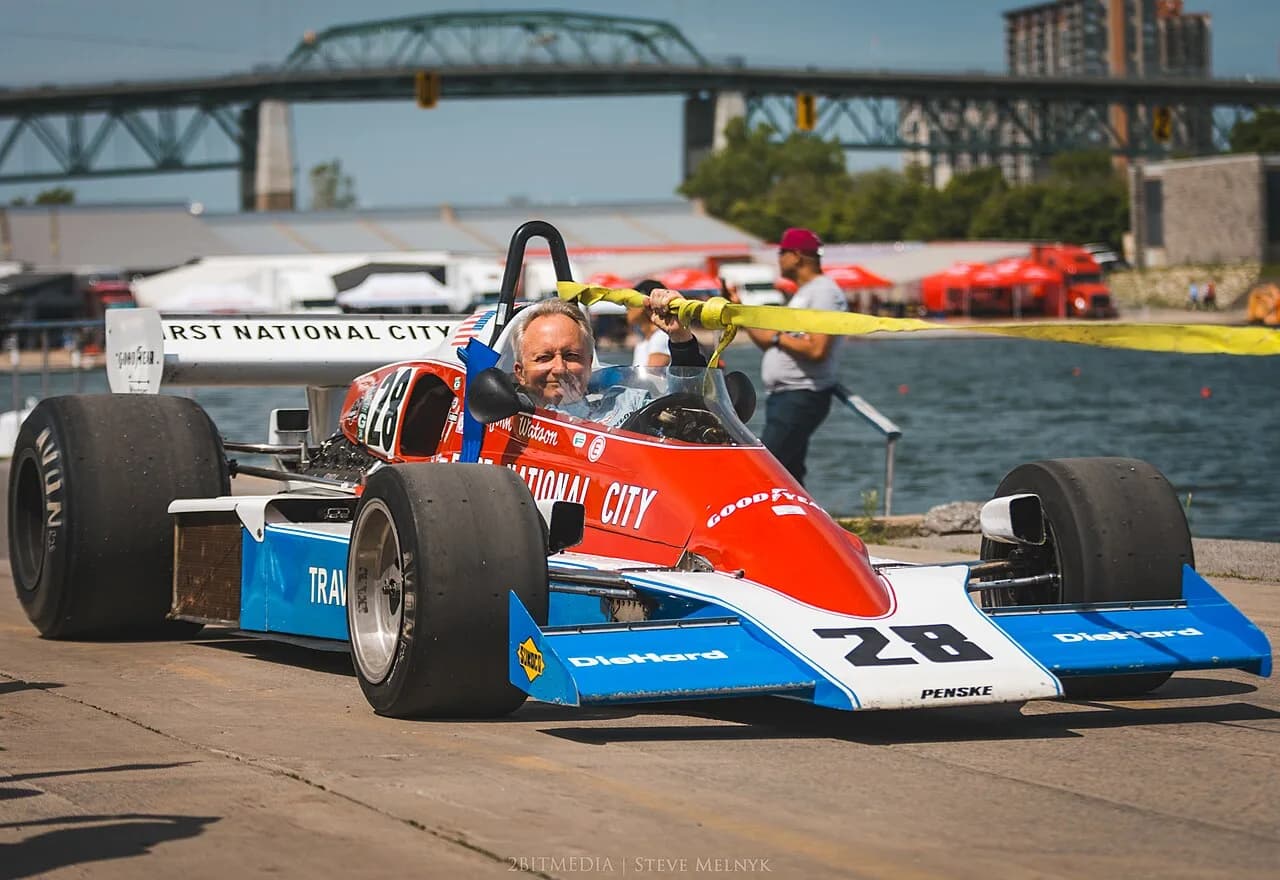
John Watson · Austrian Grand Prix 1976. The recorded position is P1; this number alone does not show whether the driver completed the race distance. This marks the first win or podium where one exists, otherwise the highest recorded placing for this constructor.
Latest recorded appearance · Canadian Grand Prix
Danny Ongais · Canadian Grand Prix 1977. The recorded position is P7; this number alone does not show whether the driver completed the race distance. This is the last race start attributed to this constructor in the archive, not necessarily the end of the organisation behind it.
A distinctive way of racing
Geoff Ferris’s PC4 made a small operation competitive, using a Ford-Cosworth engine and Goodyear tyres. Watson recalled the importance of a particular set of tyres during the Austrian weekend. The progression from PC1 to PC3 and PC4 was not simply a succession of name changes: the team sought its own solution, despite temporarily using a purchased car.
What remains
Penske ended its works programme after 1976, but its cars continued with other entrants in 1977, including ATS and Interscope. Here ATS means the German wheel manufacturer, not the Italian project of 1963. The continued use of the chassis explains why the constructor’s career extends beyond that of Roger Penske’s works team.