Team story
Origins
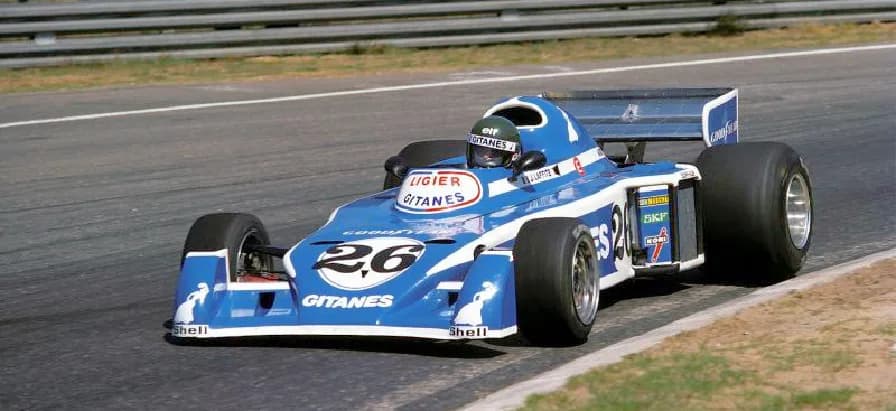
The initials JS came before Formula 1: Guy Ligier chose them to commemorate Jo Schlesser on his sports cars. After its experience at Le Mans and the acquisition of Matra’s resources, the team made its debut in 1976 with Jacques Laffite in the JS5. Gérard Ducarouge contributed to the design, recognisable for its conspicuous air intake above the cockpit and its Matra V12 engine.
The Formula 1 journey
Laffite claimed the first victory in Sweden in 1977. The 1979 JS11 brought Ligier into the leading group; second place in the Constructors’ Championship followed in 1980. Much less consistent seasons, changes of engine and changes of management came next.
The last win was Olivier Panis’s at Monaco in 1996 with the JS43, nineteen years after the inaugural victory.
Historical timeline
Three chapters in the story of Ligier
Three episodes to revisit the people, cars and races that shaped this journey.
First appearance · Brazilian Grand Prix
Jacques Laffite · Brazilian Grand Prix 1976. The recorded outcome is DNF. This is the first recorded race start, or the first entry if the team never started a race.
Sporting landmark · Swedish Grand Prix
Jacques Laffite · Swedish Grand Prix 1977. The recorded position is P1; this number alone does not show whether the driver completed the race distance. This marks the first win or podium where one exists, otherwise the highest recorded placing for this constructor.
Latest recorded appearance · Japanese Grand Prix
Pedro Diniz · Japanese Grand Prix 1996. The recorded outcome is DNF. This is the last race start attributed to this constructor in the archive, not necessarily the end of the organisation behind it.
A distinctive way of racing
Blue paintwork and the JS initials gave continuity to technically very different cars: from Matra to Cosworth, from Renault turbos to the Mugen-Hondas of the final years. Laffite was the longest-serving sporting reference point, while Didier Pironi, Patrick Depailler and Panis represented different periods. The team’s French identity remained recognisable even when its owners, drivers and suppliers no longer matched those of its beginnings.
What remains
Alain Prost acquired the team and entered it under his own name from 1997. Ligier’s nine victories therefore belong to the period ending in 1996, not to the subsequent Prost Grand Prix. The marque later continued building sports cars through other organisations and programmes: the memory of the single-seaters sits alongside that of the prototypes, without making their histories interchangeable.