Team story
Origins
The split from Simca at the end of 1951 left Amédée Gordini to support his own programme. Cars and engines continued to be built in the Paris workshop on boulevard Victor as the World Championship switched to Formula 2. Jean Behra, Robert Manzon and Maurice Trintignant formed the core of a French team capable of taking on Ferrari without an equivalent industrial organisation behind it.
The Formula 1 journey
Behra took third place in Switzerland in 1952; Manzon added another podium at the French Grand Prix. At Reims, Behra also beat the Ferraris in the Grand Prix de la Marne, but that victory came in a non-championship race. The distinction matters: Gordini did not win a World Championship Grand Prix, despite beating leading rivals in other events during the same period.
Historical timeline
Three chapters in the story of Gordini
Three episodes to revisit the people, cars and races that shaped this journey.
First appearance · Swiss Grand Prix
Jean Behra · Swiss Grand Prix 1952. The recorded position is P3; this number alone does not show whether the driver completed the race distance. This is the first recorded race start, or the first entry if the team never started a race.
Sporting landmark · Swiss Grand Prix
Jean Behra · Swiss Grand Prix 1952. The recorded position is P3; this number alone does not show whether the driver completed the race distance. This marks the first win or podium where one exists, otherwise the highest recorded placing for this constructor.
Latest recorded appearance · Italian Grand Prix
Hermano da Silva Ramos · Italian Grand Prix 1956. The recorded outcome is DNF. This is the last race start attributed to this constructor in the archive, not necessarily the end of the organisation behind it.
A distinctive way of racing
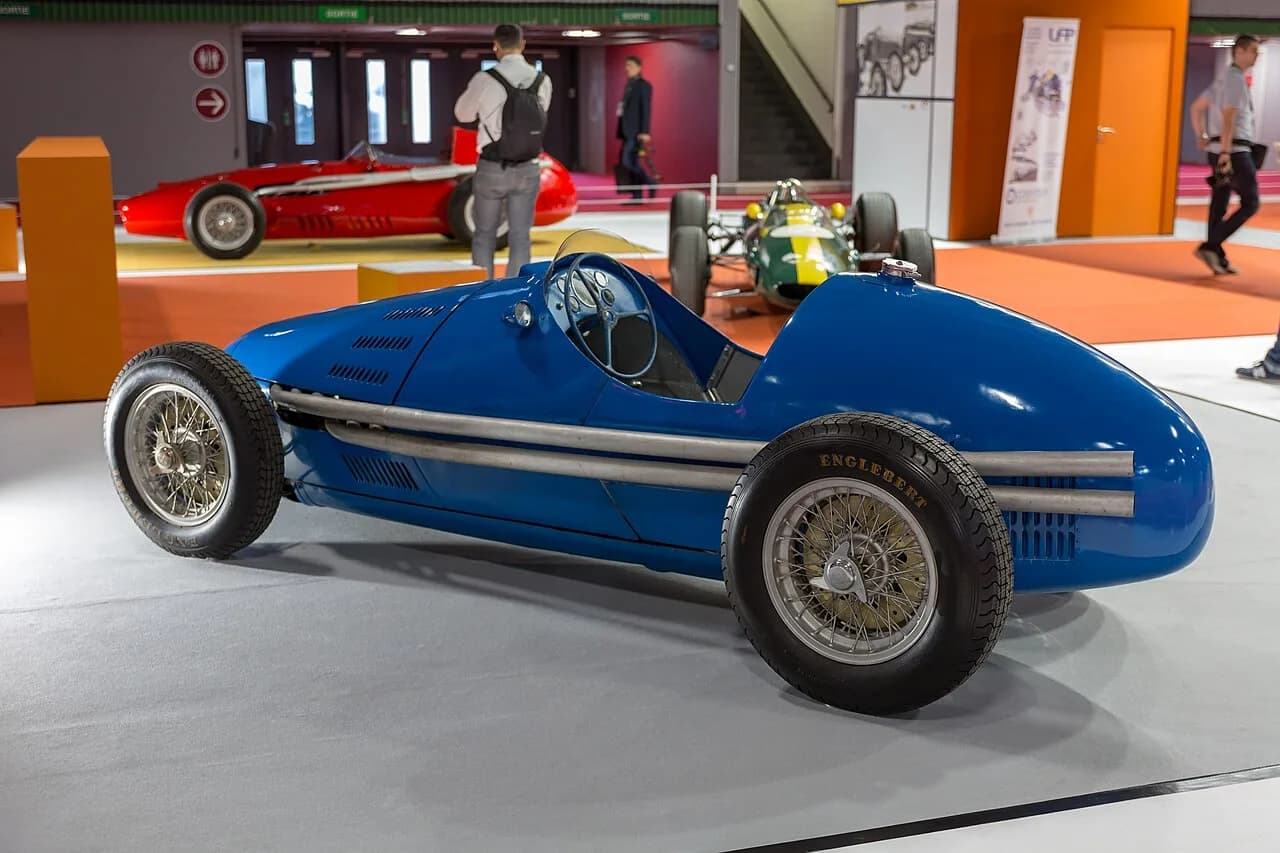
The T16 spanned the Formula 2 years and the subsequent return to Formula 1. The T32 introduced a 2.5-litre straight-eight, without closing the gap to the larger manufacturers. Gordini did more than buy an engine: its project encompassed the entire single-seater.
Its range of sports cars and single-seaters, however, made demands on the same small group of engineers.
What remains
Its last recorded World Championship appearances came in 1956. Meanwhile, Gordini had begun talks with Renault that led to collaboration on production cars, starting with the Dauphine. The name would also become familiar through sporting Renaults; that commercial reach stemmed from the engine tuner’s work, not from titles won by his Grand Prix team.