Team story
Origins
Rikky von Opel offered to finance a Formula 1 car for Mo Nunn after racing his Ensigns in Formula 3. Nunn accepted, and the N173 debuted at Paul Ricard in 1973. The constructor had grown around its founder's direct experience as a driver and preparer, rather than the backing of a major car manufacturer.
The Formula 1 journey
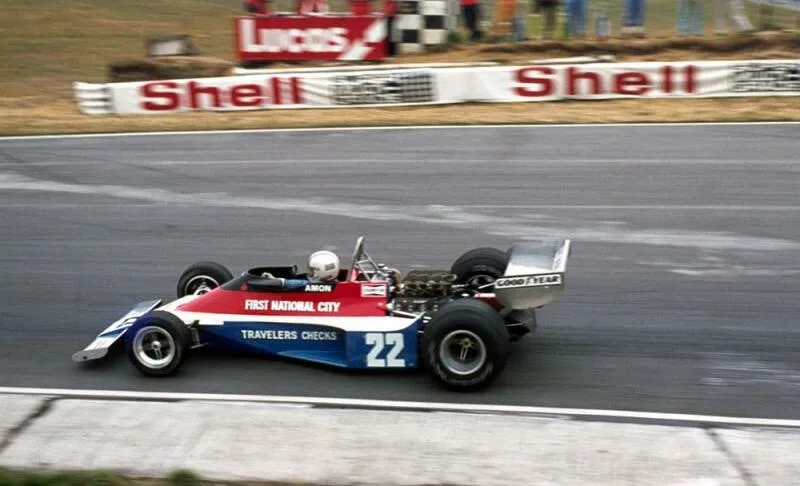
Chris Amon helped improve the car and took fifth in Spain in 1976. Clay Regazzoni, Jacky Ickx and Patrick Tambay followed. The best result came with Marc Surer, fourth in the rain at the 1981 Brazilian Grand Prix.
Nunn had only two spare wheels available: a switch to dry-weather tyres would have compromised that race.
Historical timeline
Three chapters in the story of Ensign
Three episodes to revisit the people, cars and races that shaped this journey.
First appearance · French Grand Prix
Rikky von Opel · French Grand Prix 1973. The recorded position is P15; this number alone does not show whether the driver completed the race distance. This is the first recorded race start, or the first entry if the team never started a race.
Sporting landmark · Brazilian Grand Prix
Marc Surer · Brazilian Grand Prix 1981. The recorded position is P4; this number alone does not show whether the driver completed the race distance. This marks the first win or podium where one exists, otherwise the highest recorded placing for this constructor.
Latest recorded appearance · Italian Grand Prix
Roberto Guerrero · Italian Grand Prix 1982. The recorded outcome is NC. This is the last race start attributed to this constructor in the archive, not necessarily the end of the organisation behind it.
A distinctive way of racing
The 1979 N179 tried an unusual radiator arrangement ahead of the cockpit, soon abandoned. The N180, with chassis and suspension by Ralph Bellamy and aerodynamics by Nigel Bennett, represented a new investment. Regazzoni returned to drive it in 1980, but the Long Beach crash caused permanent injuries and ended his Formula 1 career.
What remains
Ensign continued until 1982, when Roberto Guerrero was the programme's driver. Ten seasons brought no podiums but left cars built in-house and documented technical relationships: Amon helping to identify aerodynamic flaws, Surer exploiting the wet conditions. Its last points-scoring result did not solve the recurring difficulty of funding a car and developing it throughout the year.