Team story
Origins
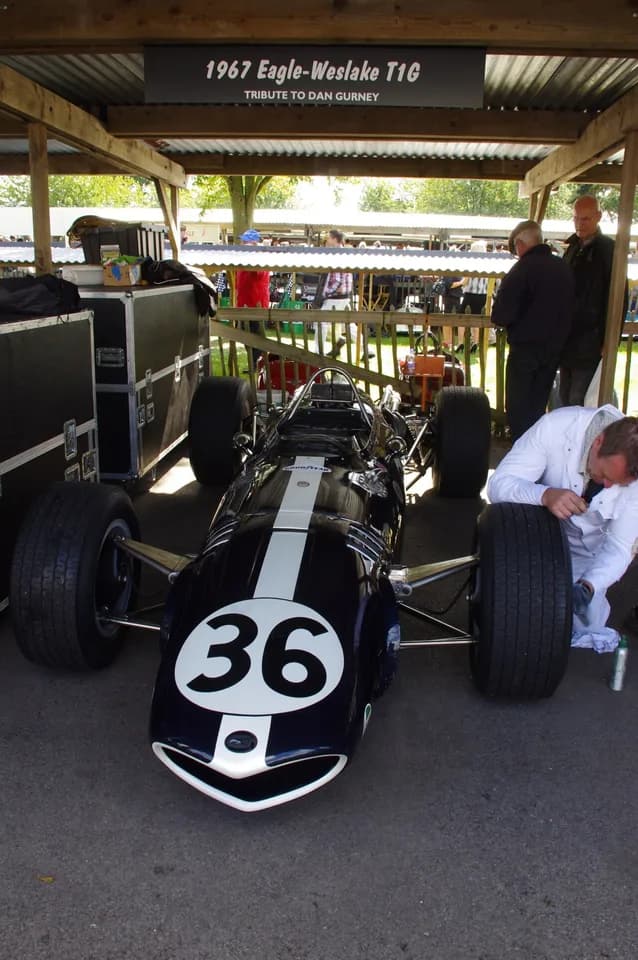
Dan Gurney wanted to race a car that also carried his signature as its constructor. All American Racers developed the Eagles with Len Terry, working for both Indianapolis and Grand Prix racing. The championship single-seater debuted at Spa in 1966 with a four-cylinder Climax while the new Gurney-Weslake twelve-cylinder engine was being readied.
The Formula 1 journey
On 18 June 1967 Gurney won the Belgian Grand Prix in the Eagle-Weslake, a week after winning Le Mans with A.J. Foyt. Third place at the Nürburgring completed Eagle's two championship podiums.
Speed did not, however, translate into consistency: the team's record lists numerous retirements caused by fuel delivery, ignition, clutch and suspension problems.
Historical timeline
Three chapters in the story of Eagle
Three episodes to revisit the people, cars and races that shaped this journey.
First appearance · Belgian Grand Prix
Dan Gurney · Belgian Grand Prix 1966. The recorded outcome is NC. This is the first recorded race start, or the first entry if the team never started a race.
Sporting landmark · Belgian Grand Prix
Dan Gurney · Belgian Grand Prix 1967. The recorded position is P1; this number alone does not show whether the driver completed the race distance. This marks the first win or podium where one exists, otherwise the highest recorded placing for this constructor.
Latest recorded appearance · Canadian Grand Prix
Al Pease · Canadian Grand Prix 1969. The recorded outcome is DSQ. This is the last race start attributed to this constructor in the archive, not necessarily the end of the organisation behind it.
A distinctive way of racing
The oval and Formula 1 Eagles were related designs, not the same car transferred between two championships. In the European programme, the Weslake V12 distinguished the project from cars using the widespread Cosworth. Gurney combined a constructor's responsibilities with driving, but Bruce McLaren, Bob Bondurant and other colleagues also raced his cars.
What remains
AAR dates its own Formula 1 programme from 1966 to 1968. The directory extends to 1969 because it also includes Al Pease's later private Eagle appearances. The American activity continued, and Bobby Unser won Indianapolis in 1975: an important Eagle success, but outside the Formula 1 World Championship and its single triumph at Spa.