Team story
Origins
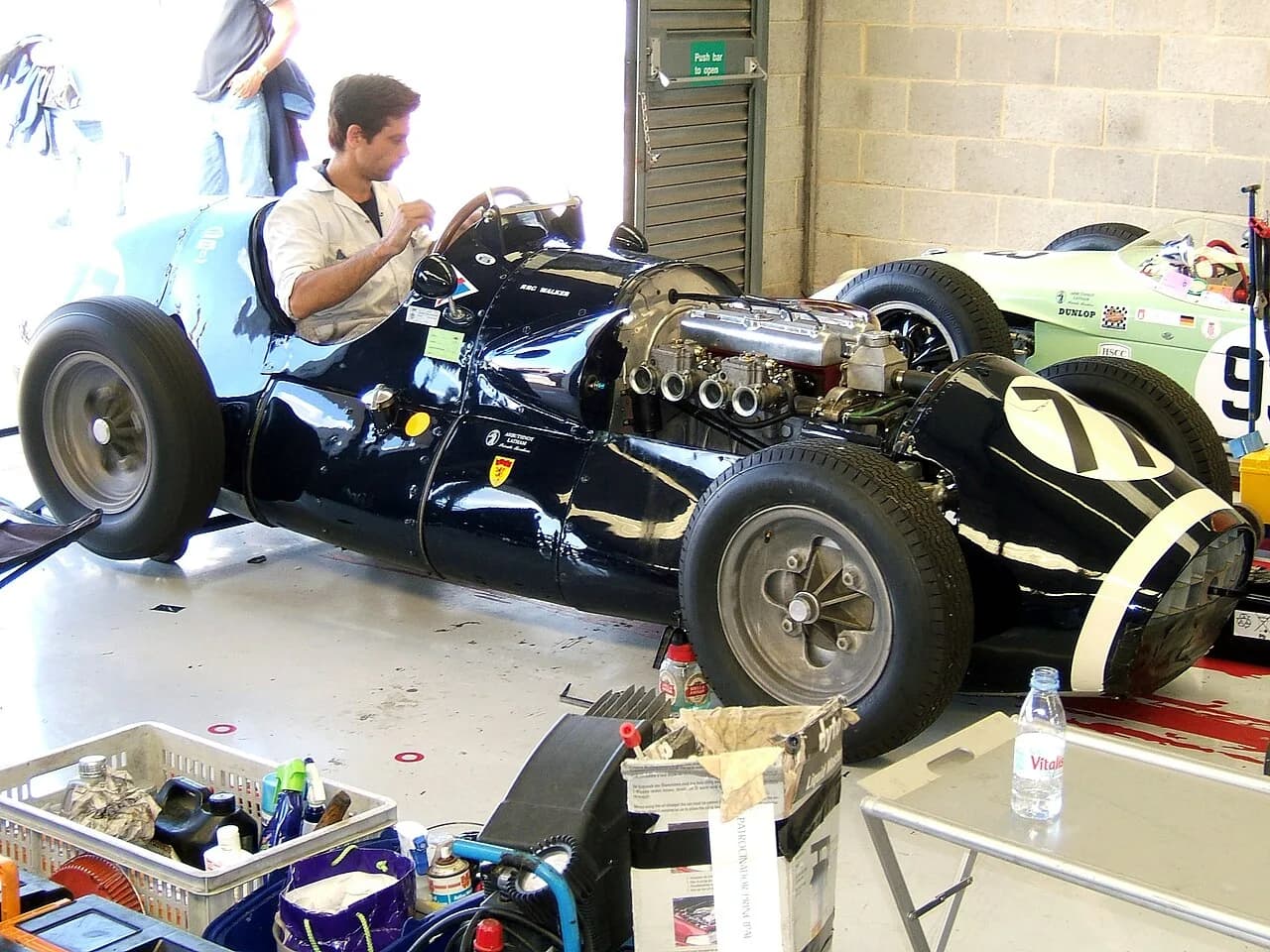
The starting money offered at Syracuse helped persuade Connaught to travel to Sicily in 1955, while Kenneth McAlpine was considering closure because of financial losses. Tony Brooks, still a dentistry student, beat the Maseratis in the Type B. It was a non-championship success, but it restored international prominence to a British team already involved in the championship since 1952.
The Formula 1 journey
Dennis Poore had taken fourth on the constructor's championship debut at Silverstone in the Type A. The Type B then carried Ron Flockhart to third at Monza in 1956, Connaught's only championship podium. Stuart Lewis-Evans was fourth at Monaco in 1957.
The Sicilian victory and these placings belong to different records: the constructor never won a Grand Prix that counted towards the title.
Historical timeline
Three chapters in the story of Connaught
Three episodes to revisit the people, cars and races that shaped this journey.
First appearance · British Grand Prix
Dennis Poore · British Grand Prix 1952. The recorded position is P4; this number alone does not show whether the driver completed the race distance. This is the first recorded race start, or the first entry if the team never started a race.
Sporting landmark · Italian Grand Prix
Ron Flockhart · Italian Grand Prix 1956. The recorded position is P3; this number alone does not show whether the driver completed the race distance. This marks the first win or podium where one exists, otherwise the highest recorded placing for this constructor.
Latest recorded appearance · United States Grand Prix
Bob Said · United States Grand Prix 1959. The recorded outcome is DNF. This is the last race start attributed to this constructor in the archive, not necessarily the end of the organisation behind it.
A distinctive way of racing
The Type B's 2.5-litre Alta four-cylinder engine was designed and manufactured by Geoffrey Taylor. Connaught therefore built its chassis around an outside supplier's engine, at a time when British industry was seeking its own place in Grand Prix racing. The A, B and C designations identify families of cars, not the number of individual examples built.
What remains
Appearances continued as far as Bob Said's Type C at Sebring in 1959. The Science Museum preserves a Type B that was never raced: not Brooks's winning car, but a physical example of the same generation. Syracuse remains the most recognisable turning point, without needing to recast it retrospectively as a championship victory.