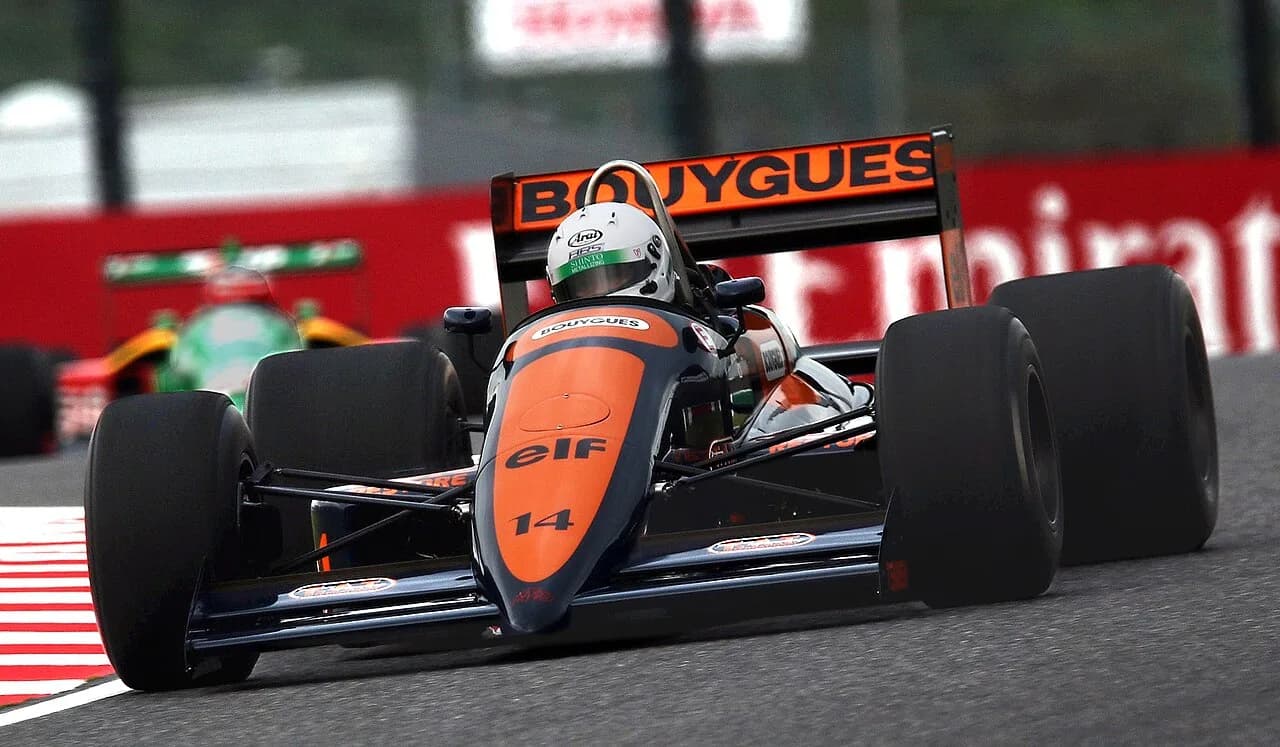
Team story
Origins
From the Garage de l'Avenir in Gonfaron, Henri Julien and Christian Vanderpleyn developed a succession of single-seaters for the junior categories. AGS went on to win the final European Formula 2 race, at Brands Hatch in 1984 with Philippe Streiff. Two years later, Ivan Capelli gave the JH21C its World Championship debut at Monza, powered by a Motori Moderni turbo engine.
The Formula 1 journey
Roberto Moreno scored the first point with sixth place at Adelaide in 1987. Gabriele Tarquini repeated that result in Mexico in 1989, but the season had already been marked by the testing accident that ended Streiff's career. With crowded grids and demanding pre-qualifying sessions, AGS began to spend increasing numbers of race weekends without making it into the race.
Historical timeline
Three chapters in the story of AGS
Three episodes to revisit the people, cars and races that shaped this journey.
First appearance · Italian Grand Prix
Ivan Capelli · Italian Grand Prix 1986. The recorded outcome is DNF. This is the first recorded race start, or the first entry if the team never started a race.
Sporting landmark · Australian Grand Prix
Roberto Moreno · Australian Grand Prix 1987. The recorded position is P6; this number alone does not show whether the driver completed the race distance. This marks the first win or podium where one exists, otherwise the highest recorded placing for this constructor.
Latest recorded appearance · Monaco Grand Prix
Gabriele Tarquini · Monaco Grand Prix 1991. The recorded outcome is DNF. This is the last race start attributed to this constructor in the archive, not necessarily the end of the organisation behind it.
A distinctive way of racing
The JH designations span the work of different designers and successive developments, from the naturally aspirated JH22 to the carbon-fibre and Kevlar JH24. The attempt to expand also brought changes of ownership: Julien sold the team to Cyril de Rouvre. Guy Nègre's experimental W12, tested in an old AGS chassis, never became the engine used in its Grands Prix.
What remains
The World Championship career ended in 1991, not 1992. Single-seater driving experiences continued at the Circuit du Var, however, and were later joined by the restoration of historic cars. Tarquini's restored JH24 and JH25 maintain a physical link with the team: the school was not a fresh championship entry, but a different life for its technical expertise.