Team story
Origins
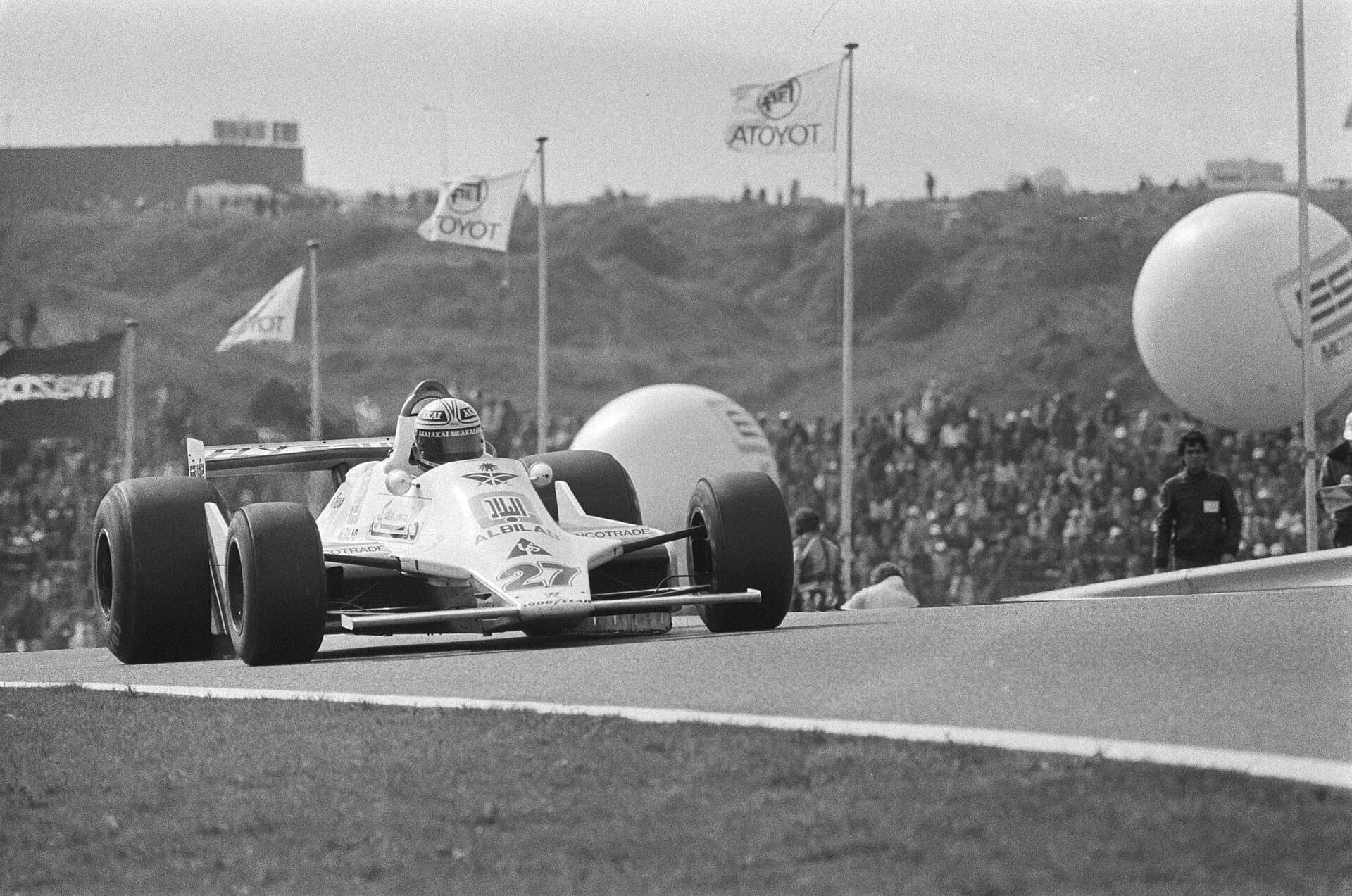
After difficult years with earlier organisations, Frank Williams founded the modern team in 1977 alongside engineer Patrick Head. They began in an old warehouse with limited resources but clearly defined roles: Williams sought funding and protected the team’s independence, while Head built simple, rigid and efficient cars. The ground-effect FW07 brought the first victories in 1979; as early as 1980, Alan Jones and Carlos Reutemann delivered both championships to one of the youngest organisations on the grid.
The Formula 1 journey
Williams managed to win with different engines and regulations: Ford, Honda and Renault accompanied seven drivers’ titles and nine constructors’ titles. The clear division of responsibilities between ownership and technical leadership allowed the team to keep growing even when Frank could no longer follow it at the circuits as he had before. The active suspension of Mansell’s FW14B and the sophistication of Prost’s FW15C took electronics to an unprecedented level; Hill and Villeneuve extended the Renault era until 1997.
Ayrton Senna’s death in 1994 profoundly affected the team, which responded by winning that season’s constructors’ title.
Historical timeline
Three chapters in the story of Williams
Three episodes to revisit the people, cars and races that shaped this journey.
First appearance · Argentine Grand Prix
Alan Jones · Argentine Grand Prix 1978. The recorded outcome is DNF. This is the first recorded race start, or the first entry if the team never started a race.
Sporting landmark · British Grand Prix
Clay Regazzoni · British Grand Prix 1979. The recorded position is P1; this number alone does not show whether the driver completed the race distance. This marks the first win or podium where one exists, otherwise the highest recorded placing for this constructor.
Latest recorded appearance · Spanish Grand Prix
Carlos Sainz Jr. · Spanish Grand Prix 2026. The recorded outcome is DNF. This is the latest start in the archived snapshot, not the end of the team’s activities.
A distinctive way of racing
For Williams, the team was always more important than the individual. Frank Williams and Patrick Head built an organisation that sought the best available engine, gave engineers considerable freedom and demanded performance from its drivers without making them the financial centre of the project. This philosophy made it possible to move from Cosworth to Honda and then Renault while continuing to win, but it also contributed to famous partings.
The best cars combined clean aerodynamics, robust mechanics and advanced electronics: not isolated exercises, but tools conceived to win both championships over the course of a season.
What remains
More than any other team, Williams embodies the idea of a British garagiste becoming a world power without producing road cars. Its culture placed the constructor ahead of an individual driver’s celebrity, generating success but also difficult partings. The subsequent decline and sale to Dorilton Capital in 2020 do not erase Grove’s importance: for two decades, Williams was the laboratory in which independence, aerodynamics, mechanics and electronics proved they could beat the largest industrial groups.