Airfield perimeter
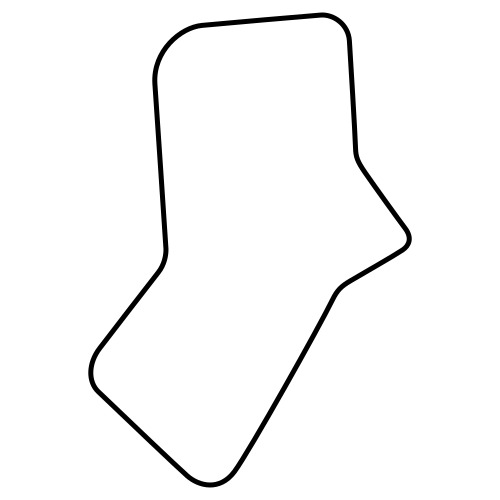
- F1 period
- 1950-1951
- seasons represented
- 2
- Length
- Data unavailable
- Turns
- Data unavailable
Race winners
Completed World Championship races at this circuit, with winning driver and constructor. A season appears only after the race result is published.
60 matching races
Counts cover filtered archived races. Shared wins count for each driver; each constructor is counted once per race.
Race winners
Drivers officially credited with pole in each edition. New weekends are added once official data is published, without waiting for the race.
Penalties can make the official pole differ from the fastest qualifier. In 2021 Sprint weekends, pole was awarded through the Sprint; from 2022 it comes from Grand Prix qualifying.
61 matching races
Counts cover filtered archived editions: one pole per Grand Prix, not per session.
Track evolution · 1950–2026
Select two Formula 1 configurations. Their shapes and documented seasons are shown separately, without applying modern technical data to historical layouts.
Configuration timeline
10
The layouts trace Silverstone's evolution from the fast perimeter of the former airfield to the 2010 configuration and the new pit complex opened in 2011, which also moved the start line.
Schematic drawings do not show every minor alteration. Consult the stories and sources for historical context.
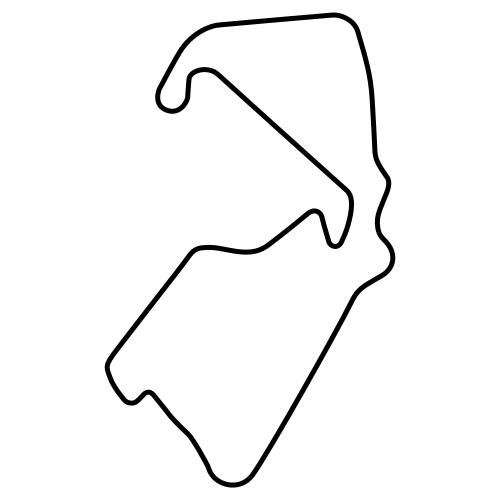
Data applies only to this configuration, according to the linked source; it is not copied to earlier layouts. 2026 · Historical sources ↗
From 2011 the Wing changes the pit facilities. The outline can be identical to 2010: a different period does not necessarily mean different corners.
Historical sources ↗Open a story to explore the circuit’s history, consult its source and find the race in the archive.
On 13 May 1950, Silverstone hosted the first race of the Formula 1 World Championship. The former airfield was already a racing venue, but that start gave it a new place in the sport's history. Alfa Romeos filled the front of the grid, and Giuseppe ‘Nino’ Farina beat team-mate Luigi Fagioli. Farina would also become the first world champion: this was more than a circuit debut, the beginning of a championship connecting seasons and generations.
On the fast former airfield circuit, José Froilán González earned Ferrari’s first World Championship race victory. Beating Alfa Romeo, the benchmark of the inaugural season, made Silverstone the setting for a turning point in Ferrari’s history. The Grand Prix archive connects that achievement to its drivers and results.
Frank Williams and Patrick Head had founded the new team only two years earlier. At Silverstone, changes to the FW07’s floor helped turn promise into pace. Alan Jones took pole but retired with a water leak; Clay Regazzoni was there to bring the car home first. It was not the victory Saturday had suggested, but it gave the young Williams Grand Prix Engineering team its first win in front of its home crowd.
At Silverstone in 1987, Williams team-mates Nigel Mansell and Nelson Piquet were also rivals for the championship. An unscheduled stop left Mansell almost thirty seconds behind. He recovered lap after lap, then wrong-footed Piquet on the Hangar Straight and passed him at Stowe with three laps remaining. Mansell won in front of his home crowd. The speed of the comeback mattered, but so did the tension of a fight within the same garage.
The 2010 redesign changed Silverstone’s route. Comparing the diagrams reveals the new inland section while parts of the historical outline remain recognizable. It shows how a circuit can reshape its lap while retaining traces of the airfield from which it developed.
The Wing pit complex opened in 2011 and the start line moved. The 2010 and 2011 outlines can therefore look very similar: a separate archive configuration does not necessarily mean a radical change to the corners. Here, the organization of the lap around the pits and finish line also matters.
F1 period: 1996
F1 period: 2010
Race Archive
Move through the seasons, moments and other venues connected to this circuit.