Layout 1950–1954
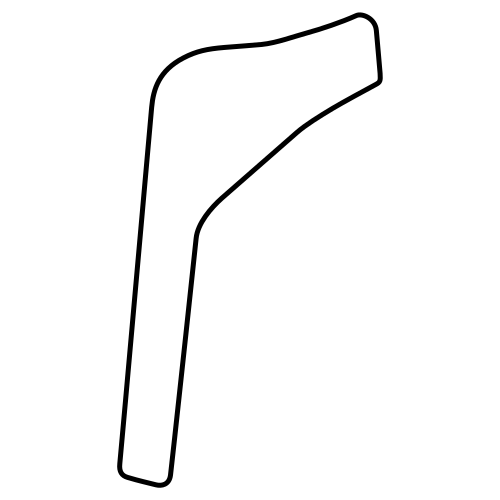
- F1 period
- 1950-1954
- seasons represented
- 5
- Length
- Data unavailable
- Turns
- Data unavailable
Race winners
Completed World Championship races at this circuit, with winning driver and constructor. A season appears only after the race result is published.
75 matching races
Counts cover filtered archived races. Shared wins count for each driver; each constructor is counted once per race.
Race winners
Drivers officially credited with pole in each edition. New weekends are added once official data is published, without waiting for the race.
Penalties can make the official pole differ from the fastest qualifier. In 2021 Sprint weekends, pole was awarded through the Sprint; from 2022 it comes from Grand Prix qualifying.
76 matching races
Counts cover filtered archived editions: one pole per Grand Prix, not per session.
Track evolution · 1950–2026
Select two Formula 1 configurations. Their shapes and documented seasons are shown separately, without applying modern technical data to historical layouts.
Configuration timeline
7
Monza's sequence of layouts documents the coexistence with the high-speed loop in the 1950s, the introduction of chicanes from 1972 and the revisions that shaped the modern Formula 1 circuit.
Schematic drawings do not show every minor alteration. Consult the stories and sources for historical context.
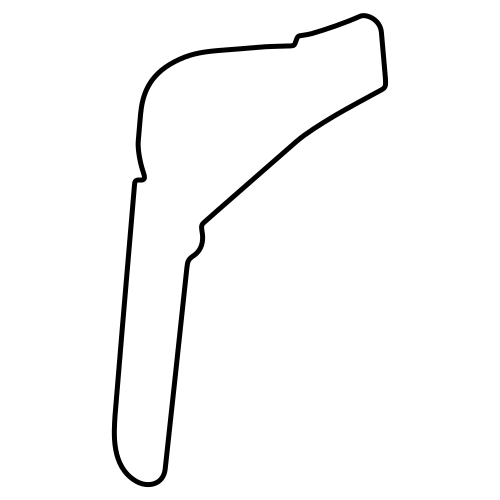
Data applies only to this configuration, according to the linked source; it is not copied to earlier layouts. 2026 · Historical sources ↗
Open a season · 2000Open a story to explore the circuit’s history, consult its source and find the race in the archive.
Before the chicanes introduced in 1972, Monza produced one of its best-known finishes. Peter Gethin won for BRM in a closely contested five-car sprint. The race offers a vivid glimpse of that circuit’s character, with long high-speed sections and a finish settled on the straight.
Chicanes were introduced in 1972 to reduce speeds. Acceleration and deceleration became more prominent features of the lap, with later revisions continuing to reshape the route. The timeline presents the main archived configurations rather than every minor alteration.
The 1988 Italian Grand Prix was the first since Enzo Ferrari's death, and McLaren had won every race so far that season. Prost retired; Senna was still leading when he collided with Jean-Louis Schlesser's lapped Williams two laps from the finish. Gerhard Berger inherited the lead, Michele Alboreto followed, and Ferrari finished first and second. Monza's celebrations did not erase the loss, but gave the afternoon a meaning beyond championship points.
The first chicane was redesigned in 2000 as a tight right-left sequence at the end of the pit straight. Comparing it with the earlier configuration focuses attention on a specific location: a small number of corners can change the approach to one of the circuit’s most recognizable braking zones.
Vettel and Toro Rosso turned a wet Monza weekend into a first victory in 2008. This was more than benefiting from others’ problems: he had taken pole and sustained his pace in the race. A team accustomed to chasing led the field at its home event. For Vettel it launched a winning career; for Faenza it showed how an exceptional Sunday could redefine a season. Monza’s podium celebrated both breakthroughs.
Penalties, a Safety Car and a red flag broke up the 2020 Italian Grand Prix. At the restart Gasly passed Stroll; when Hamilton served his penalty, the AlphaTauri took the lead. Carlos Sainz then closed in with his McLaren. Gasly had to keep his pace and his nerve through the final lap. His first Formula 1 victory brought the Faenza team back to the top step at Monza, twelve years after Vettel had won here under the Toro Rosso name.
Race Archive
Move through the seasons, moments and other venues connected to this circuit.