Layout 1980–1994
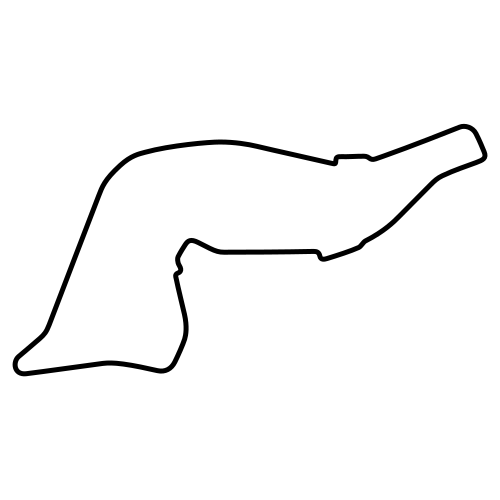
- F1 period
- 1980-1994
- seasons represented
- 15
- Length
- Data unavailable
- Turns
- Data unavailable
Race winners
Completed World Championship races at this circuit, with winning driver and constructor. A season appears only after the race result is published.
32 matching races
Counts cover filtered archived races. Shared wins count for each driver; each constructor is counted once per race.
Race winners
Drivers officially credited with pole in each edition. New weekends are added once official data is published, without waiting for the race.
Penalties can make the official pole differ from the fastest qualifier. In 2021 Sprint weekends, pole was awarded through the Sprint; from 2022 it comes from Grand Prix qualifying.
32 matching races
Counts cover filtered archived editions: one pole per Grand Prix, not per session.
Track evolution · 1980–2025
Select two Formula 1 configurations. Their shapes and documented seasons are shown separately, without applying modern technical data to historical layouts.
Configuration timeline
3
Schematic drawings do not show every minor alteration. Consult the stories and sources for historical context.

Data applies only to this configuration, according to the linked source; it is not copied to earlier layouts. 2025 · Historical sources ↗
Open a season · 2020Open a story to explore the circuit’s history, consult its source and find the race in the archive.
At Imola, the Ferraris of Gilles Villeneuve and Didier Pironi were left in front after the Renaults retired. They exchanged places in the closing laps, and Pironi made the final pass to win. Villeneuve believed they were meant to hold position and felt their trust had been broken; Pironi understood the instructions differently. The result is clear. What each driver thought had been agreed is the part of this race that has never been so simple.
Following the 1994 weekend in which Roland Ratzenberger and Ayrton Senna died, Imola changed at crucial points. Tamburello and Villeneuve were slowed with chicanes for 1995, alongside work elsewhere on the circuit. Safety is essential context for this comparison: the venue remained recognizable, but the approach to historically significant sections changed.
In the closing stages of the 2005 San Marino Grand Prix, Fernando Alonso defended his Renault against Michael Schumacher’s Ferrari. The winning margin was just 0.215 seconds. Every corner exit and potential attack mattered in a victory that depended on denying the pursuer an opening. The duel took place on the configuration used by Formula 1 from 1995 to 2006.
Race Archive
Move through the seasons, moments and other venues connected to this circuit.