Layout 1973–1980
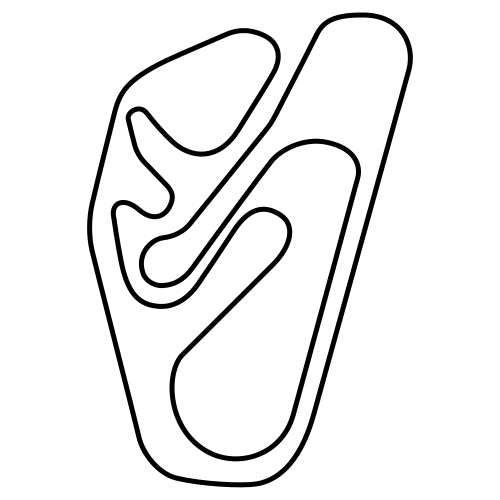
- F1 period
- 1973-1977,1979-1980
- seasons represented
- 7
- Length
- Data unavailable
- Turns
- Data unavailable
Race winners
Completed World Championship races at this circuit, with winning driver and constructor. A season appears only after the race result is published.
42 matching races
Counts cover filtered archived races. Shared wins count for each driver; each constructor is counted once per race.
Race winners
Drivers officially credited with pole in each edition. New weekends are added once official data is published, without waiting for the race.
Penalties can make the official pole differ from the fastest qualifier. In 2021 Sprint weekends, pole was awarded through the Sprint; from 2022 it comes from Grand Prix qualifying.
42 matching races
Counts cover filtered archived editions: one pole per Grand Prix, not per session.
Track evolution · 1973–2026
Select two Formula 1 configurations. Their shapes and documented seasons are shown separately, without applying modern technical data to historical layouts.
Configuration timeline
2
Schematic drawings do not show every minor alteration. Consult the stories and sources for historical context.
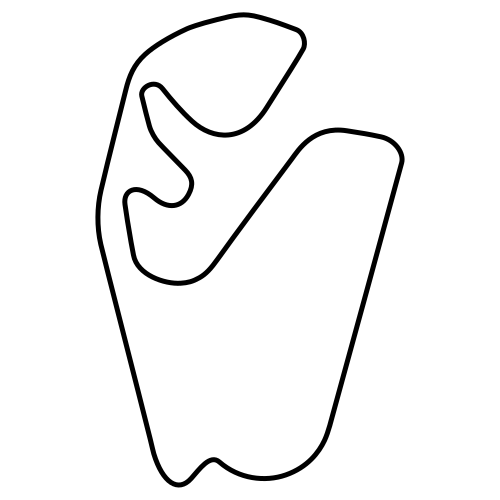
Data applies only to this configuration, according to the linked source; it is not copied to earlier layouts. 2026 · Historical sources ↗
Open a season · 1990Open a story to explore the circuit’s history, consult its source and find the race in the archive.
When the championship returned to Interlagos in 1990, the course had been substantially shortened. The new sequence after the pit straight, known as the Senna S, connected that section to Curva do Sol. New pits and a control tower accompanied the redesign. The archive outlines show two markedly different uses of the same site: the expansive 1970s circuit and the compact layout of Formula 1’s return.
Rain brought accidents and neutralisations at Interlagos. Fisichella had taken the lead before the final stoppage, but the initial lap count awarded victory to Räikkönen. A subsequent timing review corrected the result in the Jordan driver’s favour. His first win therefore lacked the immediate celebration a driver imagines. The episode illustrates why the visible order at a red flag and the regulatory classification do not necessarily coincide.
Felipe Massa won in front of his home crowd, but the 2008 title remained unresolved until the final corners. Lewis Hamilton passed Timo Glock late on to take the fifth place he needed for the championship. Rain made tyre choices decisive and changed the pace of the closing laps. One circuit therefore delivered the race victory to Massa and the championship to Hamilton.
Vettel reached the final race thirteen points ahead of Alonso, only to be spun into the back of the field in the opening corners. Through changing conditions he recovered to sixth, enough to keep the championship lead. Up front, Jenson Button won the race and Fernando Alonso finished second. Interlagos delivered two different outcomes that afternoon: the Grand Prix to Button’s McLaren, the title to Vettel’s Red Bull. Both battles matter to the story.
Max Verstappen won at Interlagos in 2019, but the podium behind him changed repeatedly in the closing laps. The two Ferraris collided and retired; then Hamilton hit Albon's Red Bull while trying to pass. Pierre Gasly finished second for Toro Rosso. Carlos Sainz, who had started last, crossed the line fourth and moved to third in the official result after Hamilton's penalty. The race's story lies partly in that difference between the finish on the road and the final classification.
Race Archive
Move through the seasons, moments and other venues connected to this circuit.