Layout 1950–1970
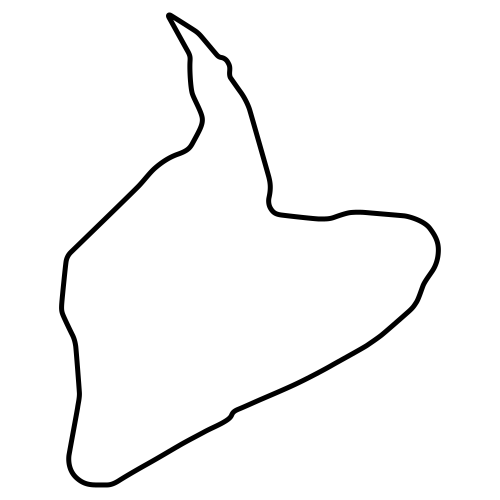
- F1 period
- 1950-1956,1958-1968,1970
- seasons represented
- 19
- Length
- Data unavailable
- Turns
- Data unavailable
Race winners
Completed World Championship races at this circuit, with winning driver and constructor. A season appears only after the race result is published.
58 matching races
Counts cover filtered archived races. Shared wins count for each driver; each constructor is counted once per race.
Race winners
Drivers officially credited with pole in each edition. New weekends are added once official data is published, without waiting for the race.
Penalties can make the official pole differ from the fastest qualifier. In 2021 Sprint weekends, pole was awarded through the Sprint; from 2022 it comes from Grand Prix qualifying.
59 matching races
Counts cover filtered archived editions: one pole per Grand Prix, not per session.
Track evolution · 1950–2026
Select two Formula 1 configurations. Their shapes and documented seasons are shown separately, without applying modern technical data to historical layouts.
Configuration timeline
4
Schematic drawings do not show every minor alteration. Consult the stories and sources for historical context.
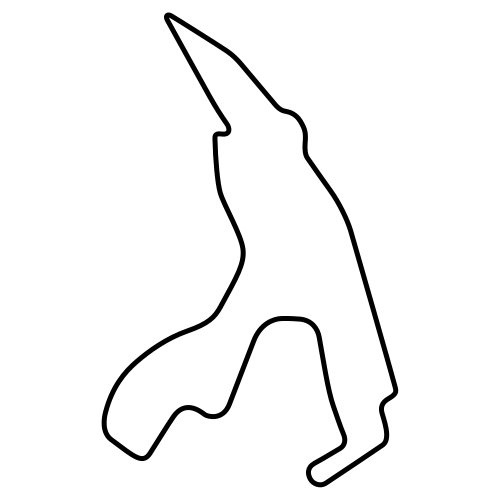
Data applies only to this configuration, according to the linked source; it is not copied to earlier layouts. 2026 · Historical sources ↗
Open a season · 2007Open a story to explore the circuit’s history, consult its source and find the race in the archive.
Rain caught the field on the opening lap of the 1966 Belgian Grand Prix at Spa's long old circuit. Jackie Stewart crashed and was trapped in his damaged, leaking BRM; fellow drivers helped free him. The experience exposed the shortcomings of the era's emergency response and strengthened his campaign for safer racing. In this story, Spa is more than a fast circuit: it is where Stewart decided that such risks could not simply be accepted without challenge.
The old course covered a much larger area. In 1979 a new section from Les Combes towards Stavelot radically shortened the lap while retaining part of the roads that had established its reputation. Comparing the outlines reveals more than a few revised corners: it was a new interpretation of the circuit. Formula 1 returned to the redesigned track in 1983.
On 22 May 1983 Alain Prost won for Renault as the championship returned to Spa. Its previous visit had been in 1970, on a very different course. The race connects two eras: the venue retained its name, but the drivers were now competing on a substantially changed circuit.
Michael Schumacher ran wide at Stavelot and fell behind team mate Martin Brundle. Following the other Benetton, he saw how badly its tyres had worn and realised his own could be no better. He stopped for slicks before the Williams drivers and moved into the lead. Schumacher’s first Grand Prix win came partly from that unlikely sequence: a mistake, a clear look at the car ahead, and a decision made as the track changed.
The 1998 Belgian Grand Prix began with a multi-car crash and continued in rain that severely limited visibility. As the favourites lost their chances, Hill and Ralf Schumacher brought Jordan into a one-two position. The remaining challenge was to protect that result. The team held its drivers in position, securing Hill’s victory and Jordan’s first win. A chaotic afternoon ended with a deliberate decision not to risk everything in an internal battle.
Rain prevented any green-flag racing at Spa in 2021. The cars completed only laps behind the Safety Car before the Grand Prix was finally stopped. The official classification put Verstappen first, Russell second and Hamilton third, with half points awarded under the rules in force at the time. Calling it an ordinary race win would miss what made the day so unusual: there was a result, but no on-track contest for it.
Race Archive
Move through the seasons, moments and other venues connected to this circuit.