Layout 2014–2021
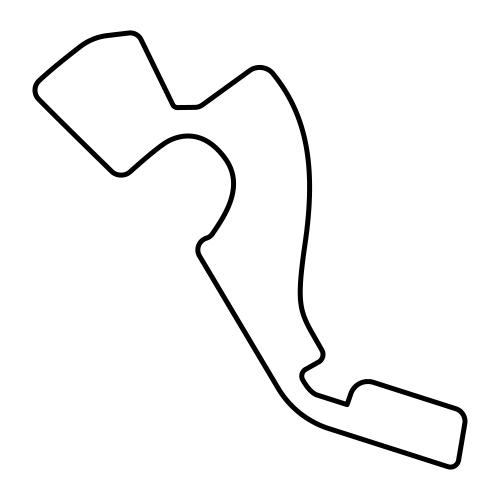
- F1 period
- 2014-2021
- seasons represented
- 8
- Length
- 5.848 km
- Turns
- 15
Data applies only to this configuration, according to the linked source; it is not copied to earlier layouts. 2021 · Historical sources ↗
Open a season · 2014Race winners
Completed World Championship races at this circuit, with winning driver and constructor. A season appears only after the race result is published.
8 matching races
Counts cover filtered archived races. Shared wins count for each driver; each constructor is counted once per race.
Race winners
Drivers officially credited with pole in each edition. New weekends are added once official data is published, without waiting for the race.
Penalties can make the official pole differ from the fastest qualifier. In 2021 Sprint weekends, pole was awarded through the Sprint; from 2022 it comes from Grand Prix qualifying.
8 matching races
Counts cover filtered archived editions: one pole per Grand Prix, not per session.
Track evolution · 2014–2021
Select two Formula 1 configurations. Their shapes and documented seasons are shown separately, without applying modern technical data to historical layouts.
Configuration timeline
1
Schematic drawings do not show every minor alteration. Consult the stories and sources for historical context.
Only one Formula 1 configuration is represented in the archive.
Data applies only to this configuration, according to the linked source; it is not copied to earlier layouts. 2021 · Historical sources ↗
Open a season · 2014Open a story to explore the circuit’s history, consult its source and find the race in the archive.
Bottas started third in the 2017 Russian Grand Prix but used the long acceleration towards the first meaningful braking zone to pass both Ferraris. He built his margin early and retained the lead through the pit stop. Vettel closed rapidly near the finish, forcing Bottas to manage traffic and pressure without error. The Mercedes crossed the line only six tenths ahead. His first victory therefore combined two different qualities: aggression to gain the position at the start and precision to defend it in the final laps. Sochi, often associated with controlled races, became the place where Bottas proved to himself and his new team that he could win.
Norris was close to his first win when rain changed the Russian Grand Prix’s ending. Hamilton switched to intermediates and won for the hundredth time. Sochi’s contest moved rapidly from pace to judgement about conditions. The decisive issue was not one corner, but recognising when the track had changed enough to require different tyres.
Race Archive
Move through the seasons, moments and other venues connected to this circuit.