Layout 1950
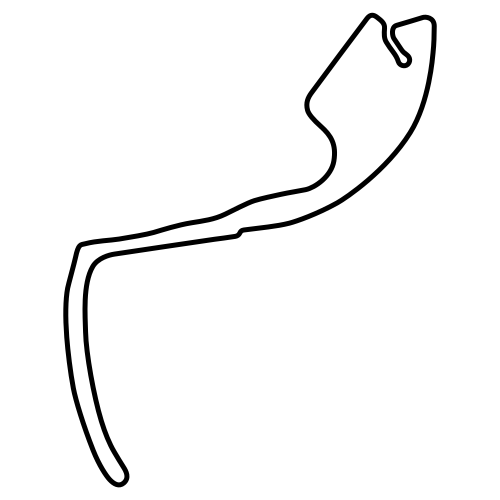
- F1 period
- 1950
- seasons represented
- 1
- Length
- Data unavailable
- Turns
- Data unavailable
Race winners
Completed World Championship races at this circuit, with winning driver and constructor. A season appears only after the race result is published.
71 matching races
Counts cover filtered archived races. Shared wins count for each driver; each constructor is counted once per race.
Race winners
Drivers officially credited with pole in each edition. New weekends are added once official data is published, without waiting for the race.
Penalties can make the official pole differ from the fastest qualifier. In 2021 Sprint weekends, pole was awarded through the Sprint; from 2022 it comes from Grand Prix qualifying.
72 matching races
Counts cover filtered archived editions: one pole per Grand Prix, not per session.
Track evolution · 1950–2026
Select two Formula 1 configurations. Their shapes and documented seasons are shown separately, without applying modern technical data to historical layouts.
Configuration timeline
7
Schematic drawings do not show every minor alteration. Consult the stories and sources for historical context.
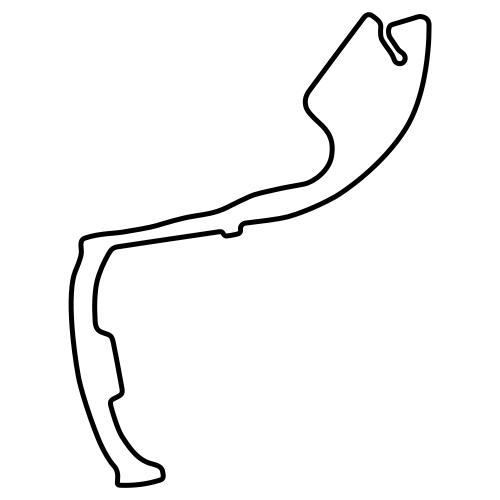
Data applies only to this configuration, according to the linked source; it is not copied to earlier layouts. 2026 · Historical sources ↗
Open a season · 2003Open a story to explore the circuit’s history, consult its source and find the race in the archive.
The first Monaco Grand Prix took place in 1929, before the Formula 1 World Championship began. Its route was already bound to the streets of the Principality, making the circuit’s development inseparable from the city. The layouts compared here begin in 1950, when Monaco joined the championship. Those earlier origins help explain its distinctive identity among racing venues.
Monaco’s closing laps repeatedly changed the likely winner in 1982. Rain made the surface treacherous and fuel problems stopped other contenders. Patrese spun and appeared to have lost his chance, but restarted and found the route to victory open again. His first win emerged from a sequence of setbacks that was hard to follow even from the cockpit. Track position mattered, but survival mattered more.
Nigel Mansell had led most of the 1992 Monaco Grand Prix when a late tyre stop handed the lead to Ayrton Senna. On fresh tyres, the Williams quickly caught the McLaren, but speed alone could not open a gap between the barriers. Senna defended every corner and won by just 0.215 seconds. The finish showed how, at Monaco, placing the car precisely can matter more than the pace available to the driver behind.
Olivier Panis won Monaco in 1996 from fourteenth on the grid. In a race shaped by rain and retirements, Ligier turned an unpromising starting position into an unexpected victory. The result reveals another side of the street circuit: survival and responding to changing circumstances can matter as much as outright speed. It was Panis’s first Formula 1 victory.
Ricciardo had taken pole and was leading when his Red Bull lost the help of its MGU-K. Many laps remained, with Vettel behind him. The failure made acceleration harder, but Monaco offered few places to pass. Ricciardo managed his brakes, tyres and lead without giving his pursuer an opening. Two years after a pit-stop mistake had cost him a likely win here, he brought a wounded car to the finish first.
Pole positions in 2021 and 2022 had not been enough: technical trouble and pit-stop issues had denied Leclerc a Monaco win. In 2024 he finally converted Saturday’s position into victory, ahead of Piastri and Sainz. The tension came not from a spectacular charge but from protecting an intensely personal opportunity. The streets that inspired his ambition to become a driver finally became the setting for his long-awaited home success.
F1 period: 1950
Race Archive
Move through the seasons, moments and other venues connected to this circuit.