Layout 1963–1970
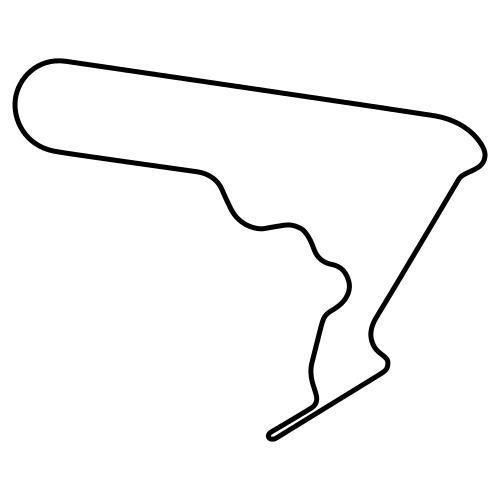
- F1 period
- 1963-1970
- seasons represented
- 8
- Length
- Data unavailable
- Turns
- Data unavailable
Race winners
Completed World Championship races at this circuit, with winning driver and constructor. A season appears only after the race result is published.
25 matching races
Counts cover filtered archived races. Shared wins count for each driver; each constructor is counted once per race.
Race winners
Drivers officially credited with pole in each edition. New weekends are added once official data is published, without waiting for the race.
Penalties can make the official pole differ from the fastest qualifier. In 2021 Sprint weekends, pole was awarded through the Sprint; from 2022 it comes from Grand Prix qualifying.
25 matching races
Counts cover filtered archived editions: one pole per Grand Prix, not per session.
Track evolution · 1963–2026
Select two Formula 1 configurations. Their shapes and documented seasons are shown separately, without applying modern technical data to historical layouts.
Configuration timeline
3
Schematic drawings do not show every minor alteration. Consult the stories and sources for historical context.
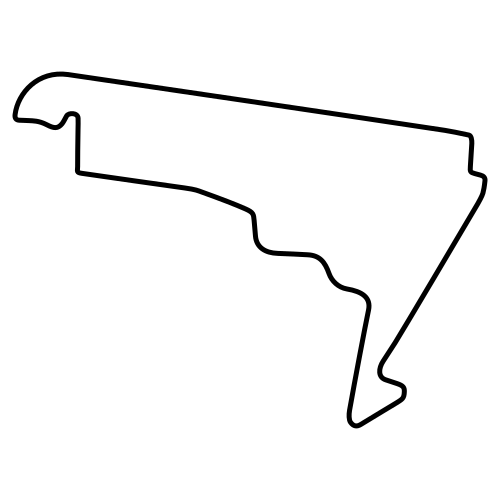
Data applies only to this configuration, according to the linked source; it is not copied to earlier layouts. 2026 · Historical sources ↗
Open a season · 2015Open a story to explore the circuit’s history, consult its source and find the race in the archive.
The 1964 Mexican finale overturned the title contest in its closing laps. Clark’s trouble opened the way for Surtees, whose second place secured Ferrari’s championship. On that configuration, staying in the race proved decisive when the arithmetic still seemed to favour others.
Richie Ginther reached the final race of 1965 without a Grand Prix win. Third on the grid in the Honda RA272, he moved into the lead early and held it to the finish. Mexico City gave him his only Formula 1 victory and Honda its first. Alongside the circuit's championship stories sits this quieter turning point: a manufacturer far from home finally saw its racing project win.
At Mexico City in 1986, Gerhard Berger stayed on track while his rivals stopped for tyres. Benetton's Pirellis could last the full distance, and the strategic advantage grew clearer with every passing lap. Berger took both his own and the team's first Formula 1 win. It was not decided by one spectacular pass, but by understanding how the tyres would behave on this circuit across an entire race.
Mansell challenged Berger for second late in the 1990 Mexican Grand Prix by taking the outside of the fast Peraltada. His Ferrari completed the move. Its significance lies in the corner itself: this was not simply braking later at the end of a straight, but sustaining an attack around a fast arc. The historical layout matters; the manoeuvre predates the modern route through the stadium.
Race Archive
Move through the seasons, moments and other venues connected to this circuit.